Grade 10 Physical Sciences · Paper 2 (Chemistry)
Matter and Materials Grade 10
Real past paper questions and answers from 2023 to 2024, with each memo split into the ticks examiners give. Try one, mark yourself, and see exactly which skill cost you marks.
- past paper questions
- 84 past paper questions
- skills
- 17 skills
- videos
- 17 videos
Try a real exam question
No sign-up. Takes 3 minutes.
Question 1.1 · November 2024 · Paper 2 · Provincial · 2 marks
Work it out on paper first. Then mark yourself with the official memo, one tick at a time.
What's in Matter and Materials Grade 10
Each skill is one thing a memo gives a tick for. Tap a skill for its own questions, notes and videos.
Classification of Matter34 past paper questions
- Define matter and atom termsGive the exact meaning of matter words like element, compound, mixture, melting point and isotope.5 past paper questions · 4 videos
- Classify substances and mixturesSort substances as elements, compounds or mixtures, or as metals, non-metals or metalloids (salt water is a homogeneous mixture).20 past paper questions · 4 videos
- Write names and formulae of compoundsWrite the formula of a compound from its name, or the name from its formula (sodium chloride is NaCl).9 past paper questions · 4 videos
States of Matter and the Kinetic Molecular Theory22 past paper questions
- Define matter and atom termsGive the exact meaning of matter words like element, compound, mixture, melting point and isotope.5 past paper questions · 4 videos
- Explain phase changes with particlesExplain solids, liquids, gases and changes of state using how particles move and are spaced, or read a heating curve (ice melting at 0 °C).12 past paper questions · 3 videos
- Define bonding and intermolecular termsGive the exact meaning of bonding words like covalent bond, ionic bond, lone pair, electronegativity and bond energy.15 past paper questions · 4 videos
- State and explain the gas lawsState the gas laws, like Boyle's law, and explain gas behaviour with moving particles (squeezing a gas makes particles hit the walls more often).6 past paper questions · 4 videos
- Identify variables in an investigationName the independent, dependent and controlled variables in an experiment (in a test of temperature on reaction rate, temperature is independent).13 past paper questions · 3 videos
- Write investigative question or conclusionWrite an investigative question, hypothesis or conclusion that links two variables (How does the length of a wire affect its resistance?).10 past paper questions · 3 videos
- Describe and evaluate an experimentName apparatus, describe or explain steps of a method, and give safety precautions (repeat readings and work out an average).6 past paper questions · 3 videos
- Plot a graph from dataPlot results on a graph with labelled axes, units and a good scale, and draw the line or curve of best fit.3 videos
The Atom22 past paper questions
- Define matter and atom termsGive the exact meaning of matter words like element, compound, mixture, melting point and isotope.5 past paper questions · 4 videos
- Find protons, neutrons and electronsWork out the number of protons, neutrons and electrons in an atom or ion (carbon-12 has 6 protons and 6 neutrons).3 past paper questions · 3 videos
- Calculate relative atomic massCalculate the average mass of an element's atoms from its isotopes and their percentages (chlorine-35 and chlorine-37 give about 35,5).4 past paper questions · 3 videos
- Write electron configurationsWrite how electrons are arranged in energy levels, as s-p notation or an Aufbau diagram (sodium is 1s² 2s² 2p⁶ 3s¹).8 past paper questions · 4 videos
- Locate elements on the periodic tableUse an electron arrangement or atomic number to find an element's group and period on the periodic table (magnesium is in group 2, period 3).3 past paper questions · 4 videos
The Periodic Table12 past paper questions
- Define matter and atom termsGive the exact meaning of matter words like element, compound, mixture, melting point and isotope.5 past paper questions · 4 videos
- Locate elements on the periodic tableUse an electron arrangement or atomic number to find an element's group and period on the periodic table (magnesium is in group 2, period 3).3 past paper questions · 4 videos
- Explain periodic trendsDescribe and explain how properties like atomic radius or ionisation energy change across a period or down a group (atoms get bigger down a group).5 past paper questions · 4 videos
Chemical Bonding24 past paper questions
- Write names and formulae of compoundsWrite the formula of a compound from its name, or the name from its formula (sodium chloride is NaCl).9 past paper questions · 4 videos
- Define bonding and intermolecular termsGive the exact meaning of bonding words like covalent bond, ionic bond, lone pair, electronegativity and bond energy.15 past paper questions · 4 videos
- Draw Lewis diagramsDraw Lewis dot diagrams showing valence electrons, shared pairs and lone pairs (water has two bonding pairs and two lone pairs).18 past paper questions · 3 videos
- Identify and compare chemical bondsName a bond as covalent, ionic or metallic and describe how it forms (electrons are shared in a covalent bond, as in H₂).17 past paper questions · 4 videos
More Matter and Materials Grade 10 questions and answers
Try each one on paper before you open the memo.
1. Question 3.4.2 · November 2024 · Paper 2 · Provincial · 2 marks
Grade 10 learners conducted an experiment to determine the heating curve of water by using ice cubes. The experiment was set up as shown below.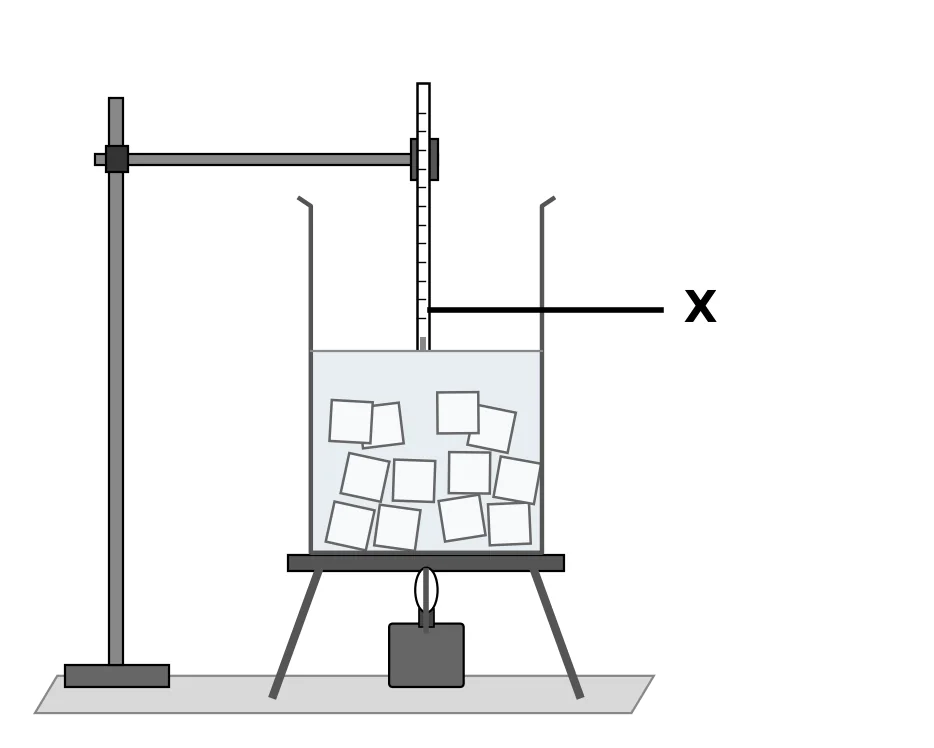 3.4 The graph below shows the results of the experiment.
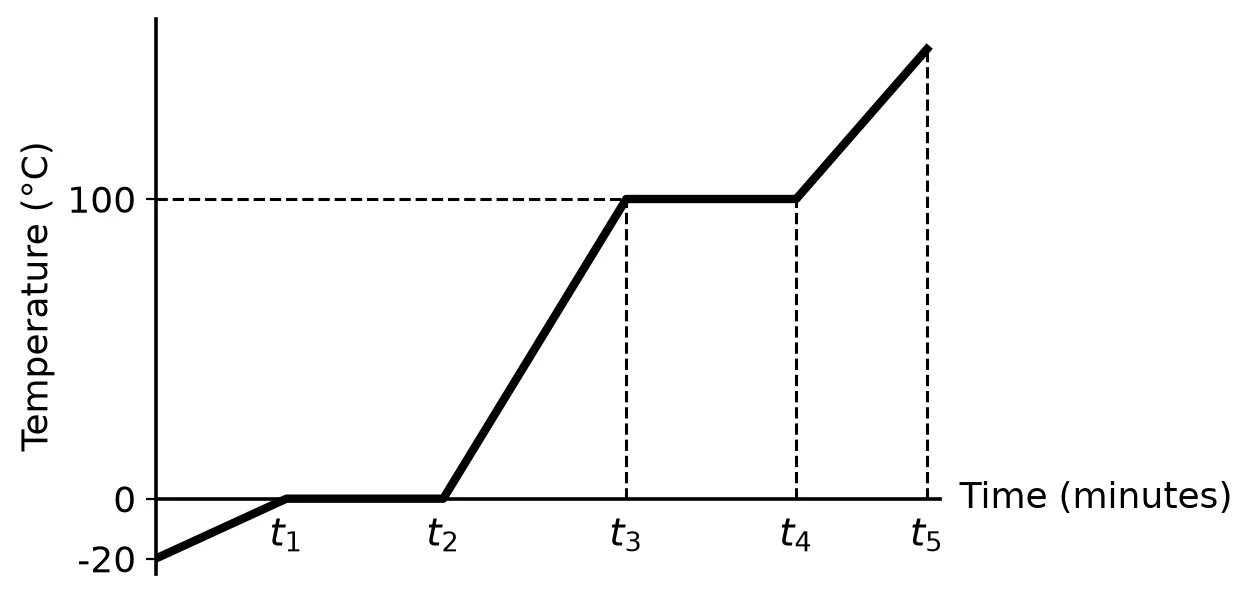 3.4.2 Will the water particles move SLOWER or FASTER between and when compared to the movement of the particles between and ? Give a reason for your answer.(2)
Show the memo (2 ticks)Memo
- ✓AnswerFASTER
1 mark · Explain phase changes with particles
- ✓ReasonThe water now exists in the liquid phase.
OR
Particles have more kinetic energy.1 mark · Explain phase changes with particles
- ✓
2. Question WE2 · Siyavula Grade 11 Physical Sciences, 3.1 Chemical bonds, Worked example 2 · 2 marks
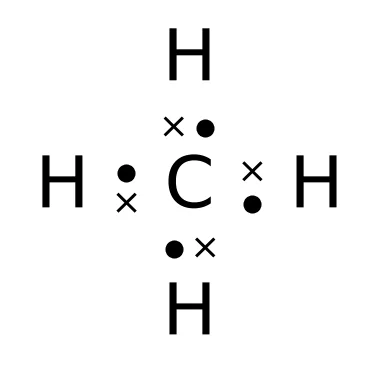
WE2 Represent methane () using a Lewis diagram(2)Show the memo (2 ticks)Memo
- ✓Valence electronsHydrogen: , valence electron. Carbon: , valence electrons.
1 mark · Draw Lewis diagrams
- ✓Lewis diagramCarbon in the centre shares one pair with each of the four H atoms (each pair one dot and one cross), see diagram.
1 mark · Draw Lewis diagrams
- ✓
3. Question WE3 · Siyavula Grade 10 Physical Sciences, 2.4 Names and formulae of substances, Worked example 3 · 3 marks
WE3 What is the formula of sodium fluoride?(3)Show the memo (3 ticks)Memo
- ✓IonsSodium ion and fluoride ion
- ✓RatioThe from sodium cancels the from fluoride, so they combine in a ratio.
- ✓Formula
- ✓
4. Question 3.2 · May/June 2024 · Paper 2 · National (DBE) · 1 mark
The boiling points of some organic compounds are shown in the table below. The atmospheric pressure is kPa.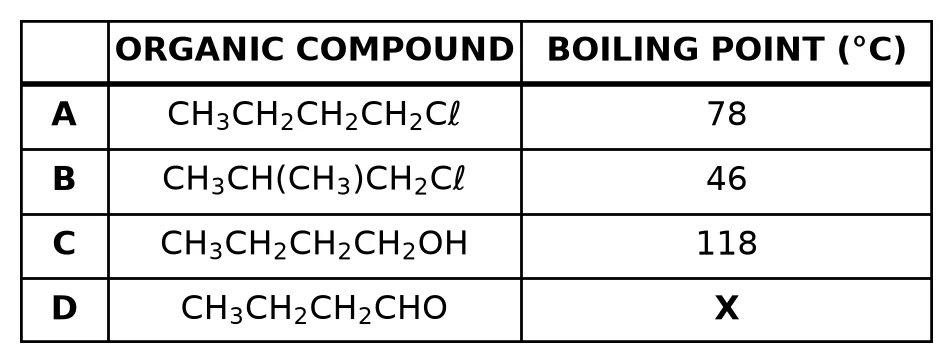 3.2 Which ONE of compounds A, B or C is mainly in the liquid phase at °C?(1)
Show the memo (1 tick)Memo
- ✓Liquid at 100 °CC
1 mark · Explain phase changes with particles
- ✓
5. Question WE1 · Siyavula Grade 10 Physical Sciences, 4.4 Structure of the atom, Worked example 1 · 4 marks
WE1 Use standard notation to represent sodium and give the number of protons, neutrons and electrons in the element.(4)Show the memo (4 ticks)Memo
- ✓ProtonsSymbol . Sodium has protons ().
1 mark · Find protons, neutrons and electrons
- ✓ElectronsSodium is neutral, so it has the same number of electrons as protons: electrons.
1 mark · Find protons, neutrons and electrons
- ✓Mass number and neutronsFrom the periodic table .
neutrons1 mark · Find protons, neutrons and electrons
- ✓Standard notation: protons, neutrons and electrons
1 mark · Find protons, neutrons and electrons
- ✓
Matter and Materials Grade 10 videos
Short lessons from South African teachers first. Videos load only when you tap play, to save your data.
Free on Android
Know exactly which skill is costing you marks.
Mark past papers tick by tick in the NavyBlue app. It remembers every mark you lose, shows you the skills to fix first, and picks your next questions.
Get NavyBlue free on Google Play
