Grade 10 Physical Sciences · Matter and Materials
Explain phase changes with particles
Explain solids, liquids, gases and changes of state using how particles move and are spaced, or read a heating curve (ice melting at 0 °C).
- past paper questions use it
- 12 past paper questions use it
- videos
- 3 videos
Learn it: explain phase changes with particles
Pick one and watch it, then try the questions below. Videos load only when you tap play.
Now try it on a real exam question
No sign-up. Takes 3 minutes.
Question 3.5 · November 2023 · Paper 2 · Provincial · 3 marks
The graph below was drawn using the results obtained.
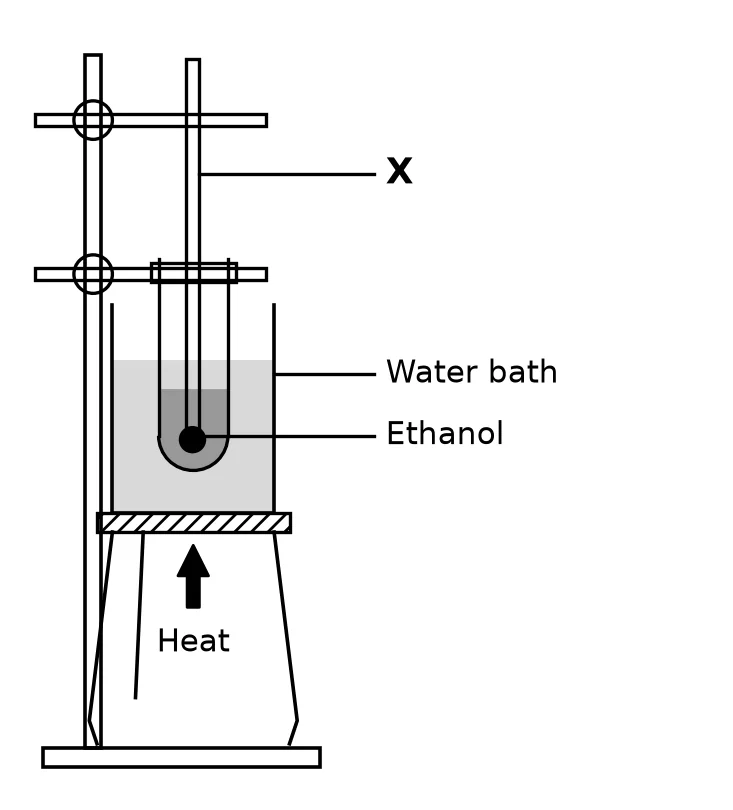
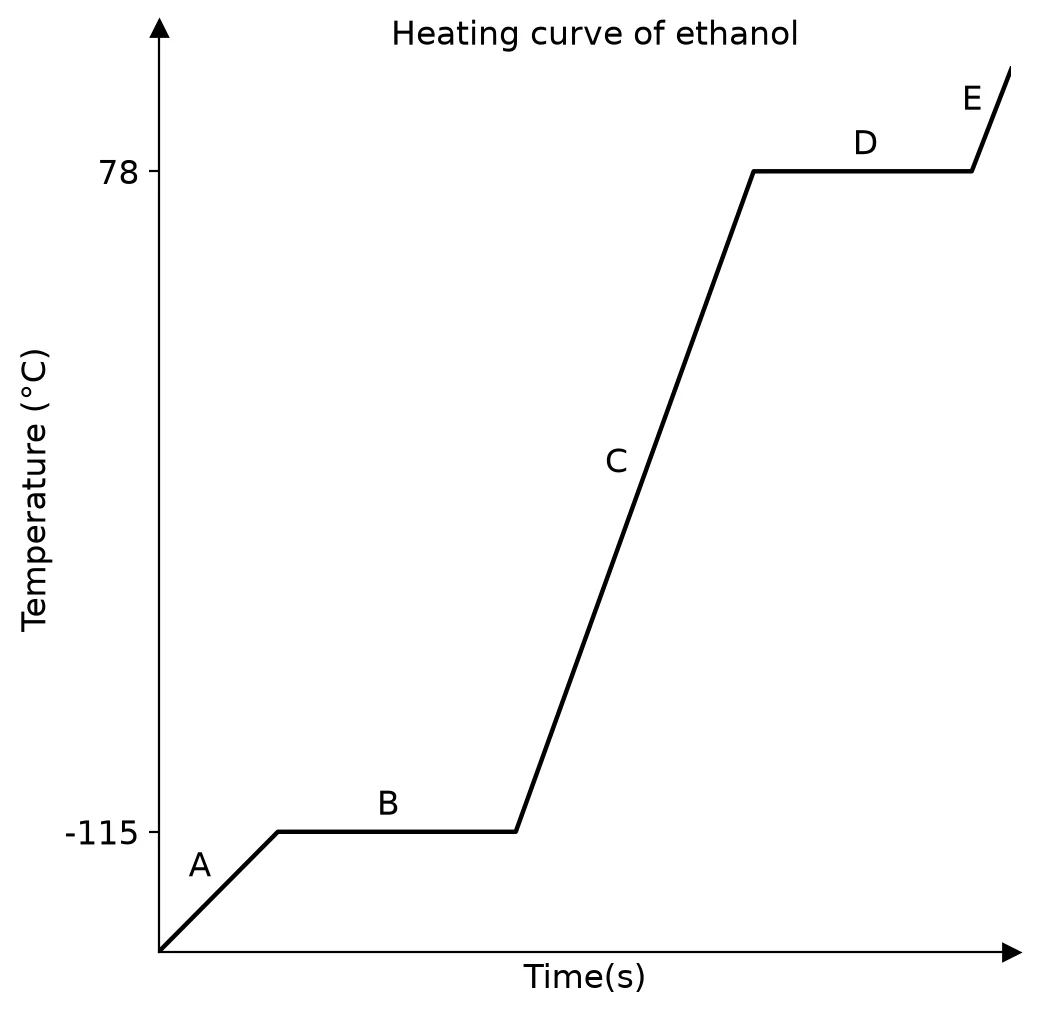
Work it out on paper first. Then mark yourself with the official memo, one tick at a time.
More past paper questions: explain phase changes with particles
Work each one out first, then open the memo and check every tick.
3. Question 3.4.2 · November 2024 · Paper 2 · Provincial · 2 marks
Grade 10 learners conducted an experiment to determine the heating curve of water by using ice cubes. The experiment was set up as shown below.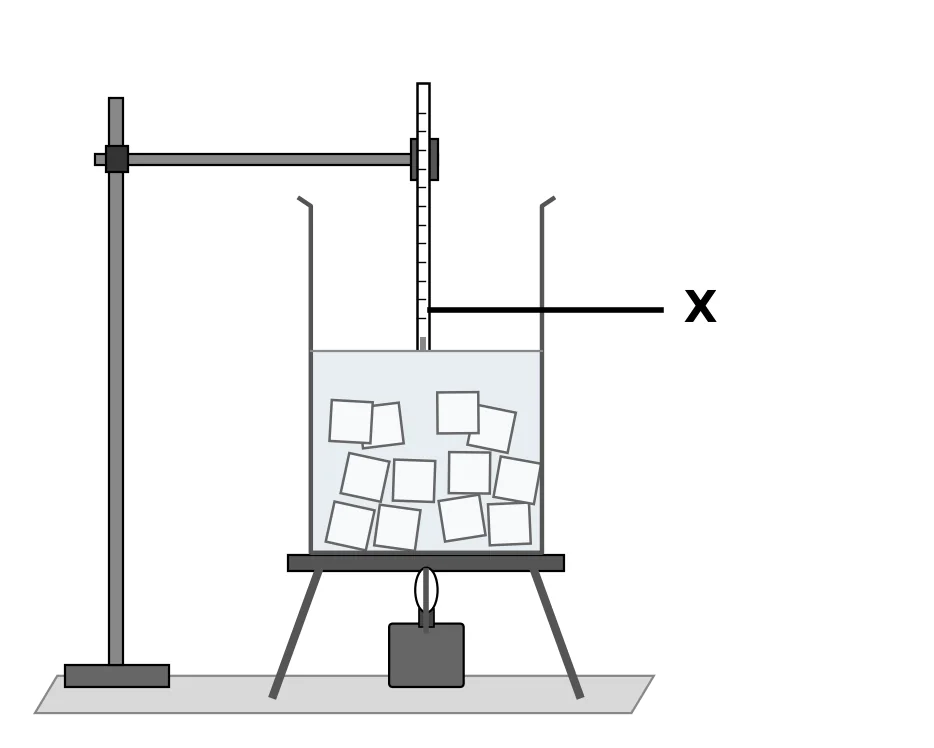 3.4 The graph below shows the results of the experiment.
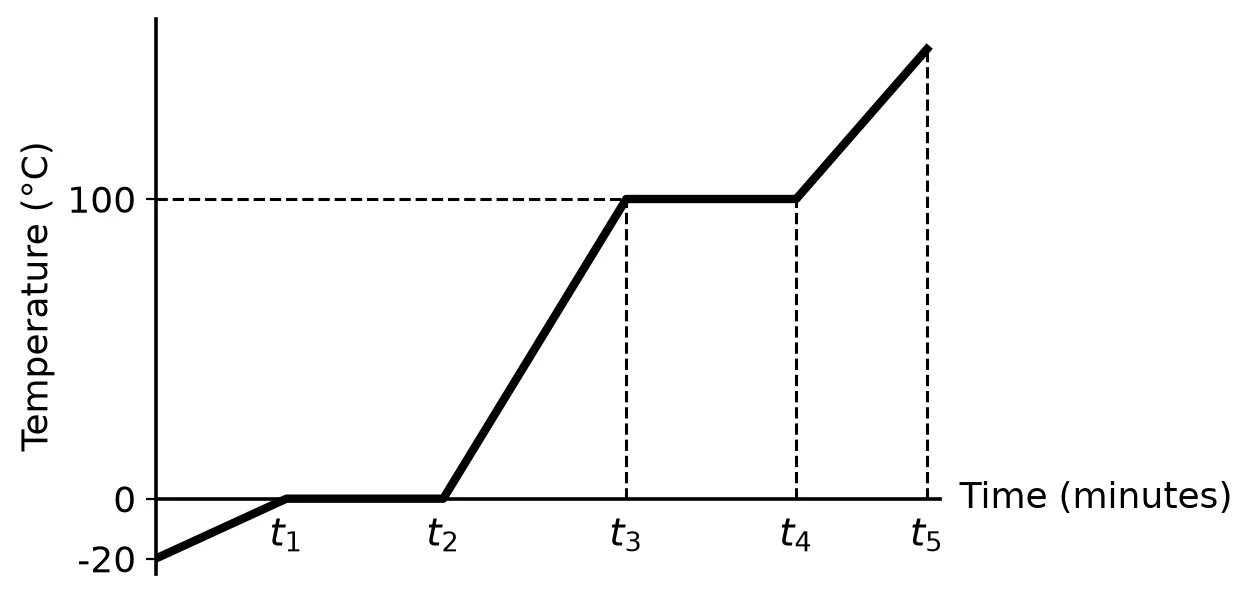 3.4.2 Will the water particles move SLOWER or FASTER between and when compared to the movement of the particles between and ? Give a reason for your answer.(2)
Show the memo (2 ticks)Memo
- ✓AnswerFASTER
1 mark · Explain phase changes with particles
- ✓ReasonThe water now exists in the liquid phase.
OR
Particles have more kinetic energy.1 mark · Explain phase changes with particles
- ✓
4. Question 3.3 · May/June 2023 · Paper 2 · National (DBE) · 1 mark
Learners investigate the boiling points of the four organic compounds given below.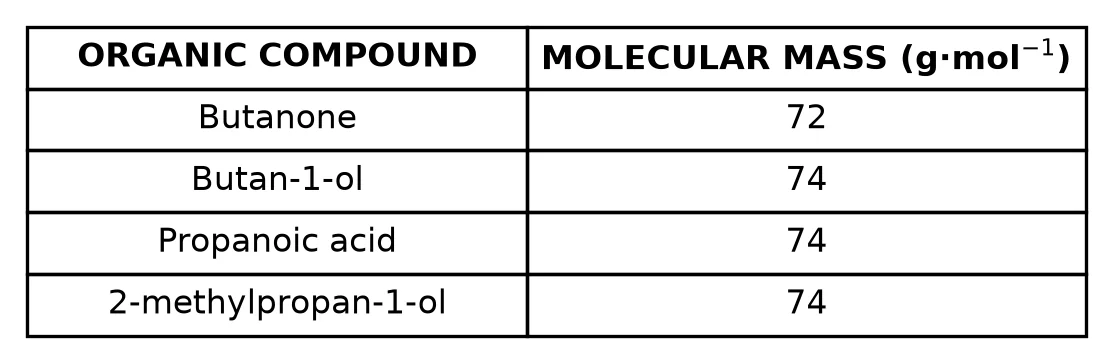 The curves P, Q, R and S below were obtained from the results of the investigation. X represents a specific temperature.
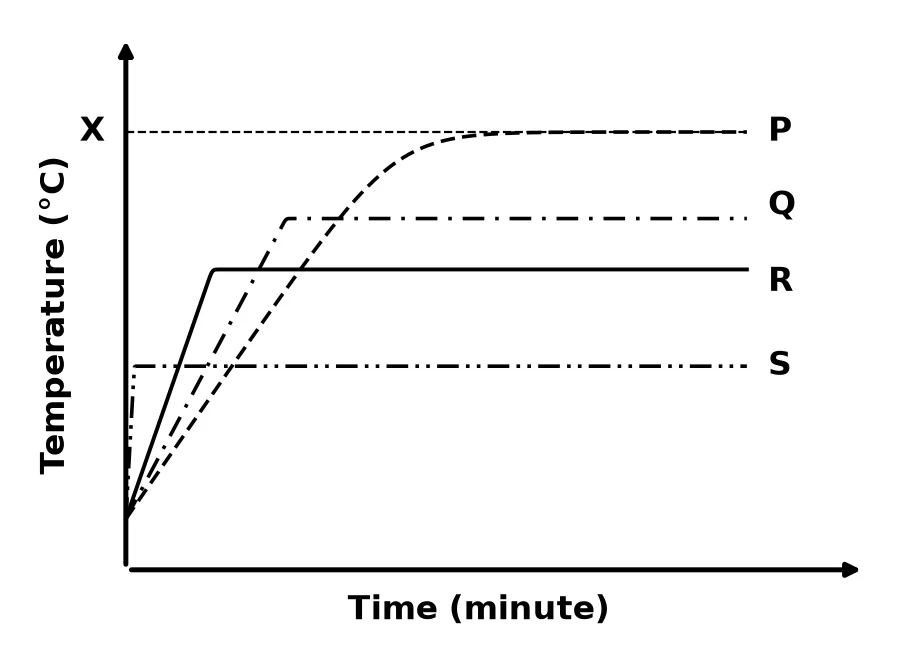 3.3 Which physical property is represented by temperature X?(1)
Show the memo (1 tick)Memo
- ✓Read the plateau of a heating curveBoiling point
1 mark · Explain phase changes with particles
- ✓
5. Question 3.2.4 · November 2022 · Paper 2 · National (DBE) · 1 mark
3.2 The table below shows the results obtained from an experiment to determine the vapour pressure of different STRAIGHT CHAIN primary alcohols at K.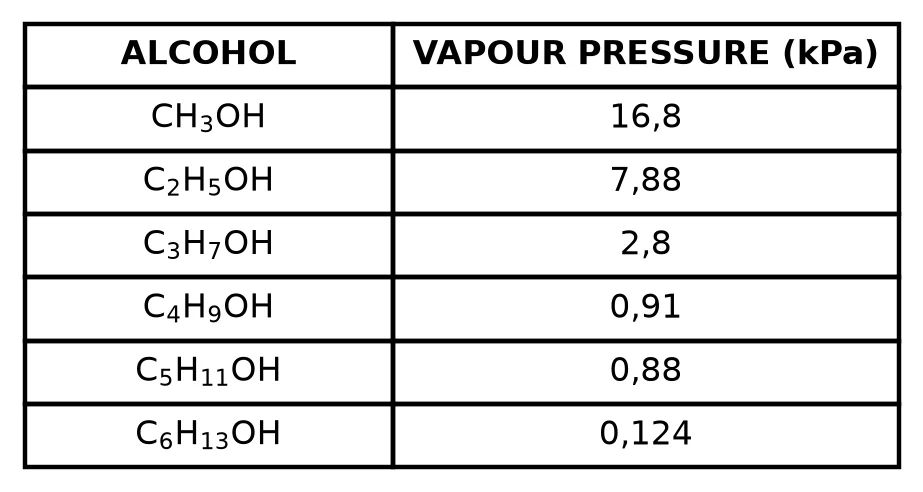 The experiment is now repeated at K.3.2.4 Will the vapour pressure of each compound INCREASE, DECREASE or REMAIN THE SAME?(1)
Show the memo (1 tick)Memo
- ✓Effect of temperatureIncreases
1 mark · Explain phase changes with particles
- ✓
6. Question 3.2.2 · November 2025 · Paper 2 · Provincial · 1 mark
3.2 Consider the boiling points of the hydrogen halides on group 16 as shown on the table below.
Answer the questions that follow.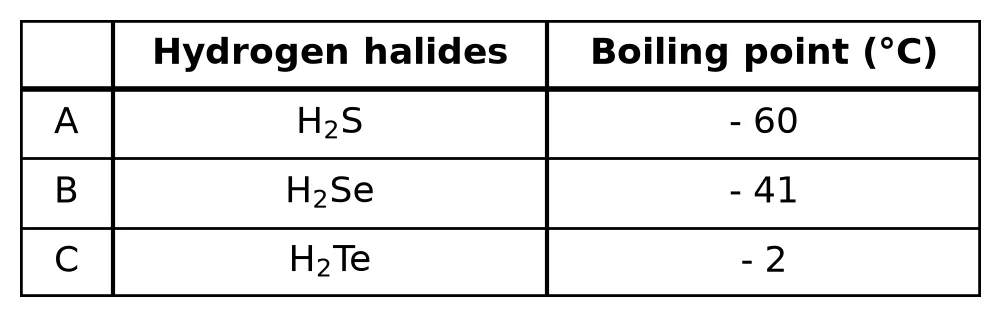 3.2.2 Write down the phase of the hydrogen halides at room temperature.(1)
Show the memo (1 tick)Memo
- ✓Phase at room temperatureGas
1 mark · Explain phase changes with particles
- ✓
Free on Android
Know exactly which skill is costing you marks.
Mark past papers tick by tick in the NavyBlue app. It remembers every mark you lose, shows you the skills to fix first, and picks your next questions.
Get NavyBlue free on Google Play
