Grade 10 Physical Sciences · Matter and Materials
State and explain the gas laws
State the gas laws, like Boyle's law, and explain gas behaviour with moving particles (squeezing a gas makes particles hit the walls more often).
- past paper questions use it
- 6 past paper questions use it
- videos
- 4 videos
Learn it: state and explain the gas laws
Pick one and watch it, then try the questions below. Videos load only when you tap play.
Now try it on a real exam question
No sign-up. Takes 3 minutes.
Question 4.3 · November 2025 · Paper 2 · Provincial · 3 marks
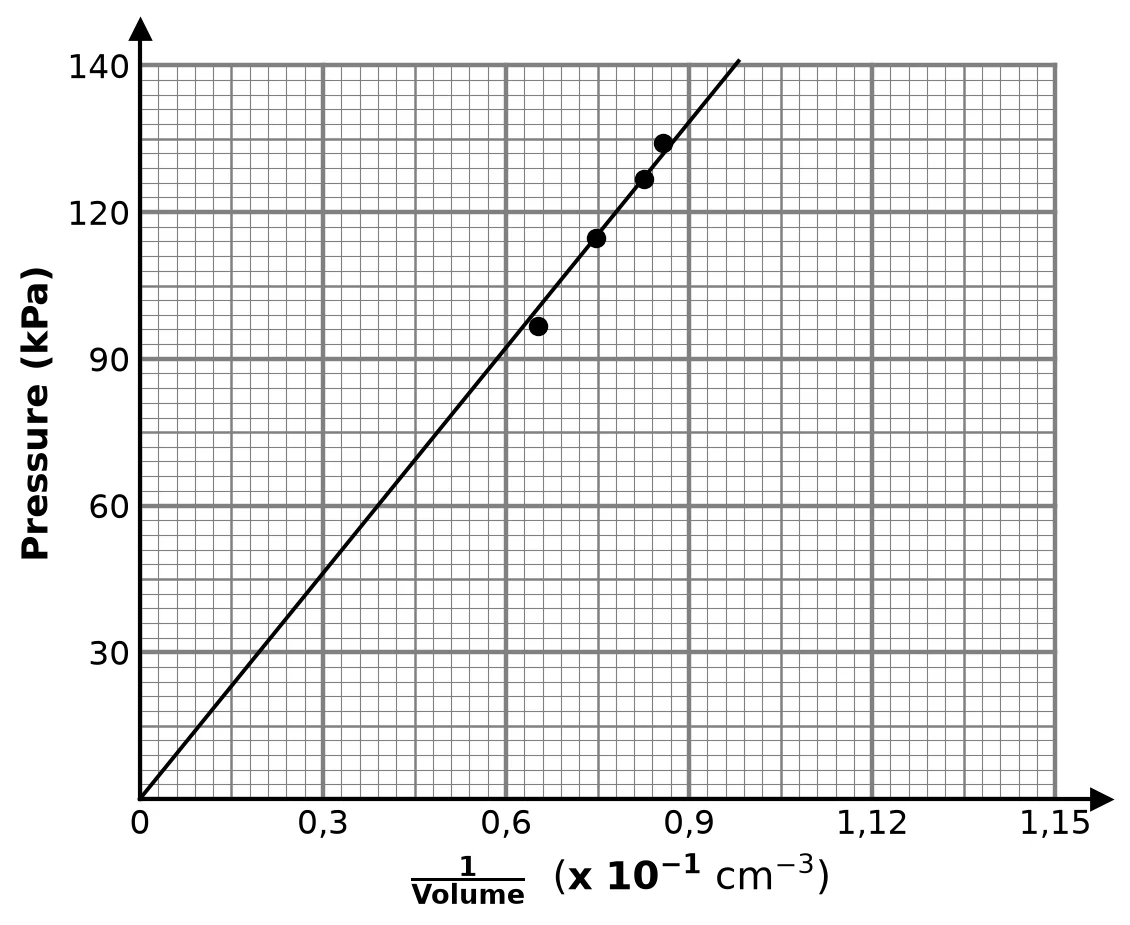
Work it out on paper first. Then mark yourself with the official memo, one tick at a time.
More past paper questions: state and explain the gas laws
Work each one out first, then open the memo and check every tick.
3. Question 1.3 · November 2024 · Paper 2 · Provincial · 2 marks
1.3 Which ONE of the following is NOT a property of the ideal gas?(2)Show the memo (1 tick)Memo
- ✓Properties of an ideal gasIn an ideal gas the molecules themselves have negligible volume compared with the volume of the container, there are no intermolecular forces and collisions are elastic. So the statement that the gas volume EQUALS the total volume of the molecules is not true of an ideal gas.
Answer: C2 marks · State and explain the gas laws
- ✓
Free on Android
Know exactly which skill is costing you marks.
Mark past papers tick by tick in the NavyBlue app. It remembers every mark you lose, shows you the skills to fix first, and picks your next questions.
Get NavyBlue free on Google Play
