Grade 10 Physical Sciences · Paper 2 (Chemistry)
Chemical Change Grade 10
Real past paper questions and answers from 2023 to 2025, with each memo split into the ticks examiners give. Try one, mark yourself, and see exactly which skill cost you marks.
- past paper questions
- 79 past paper questions
- skills
- 13 skills
- videos
- 13 videos
Try a real exam question
No sign-up. Takes 3 minutes.
Question 4.5 · May/June 2025 · Paper 2 · National (DBE) · 3 marks
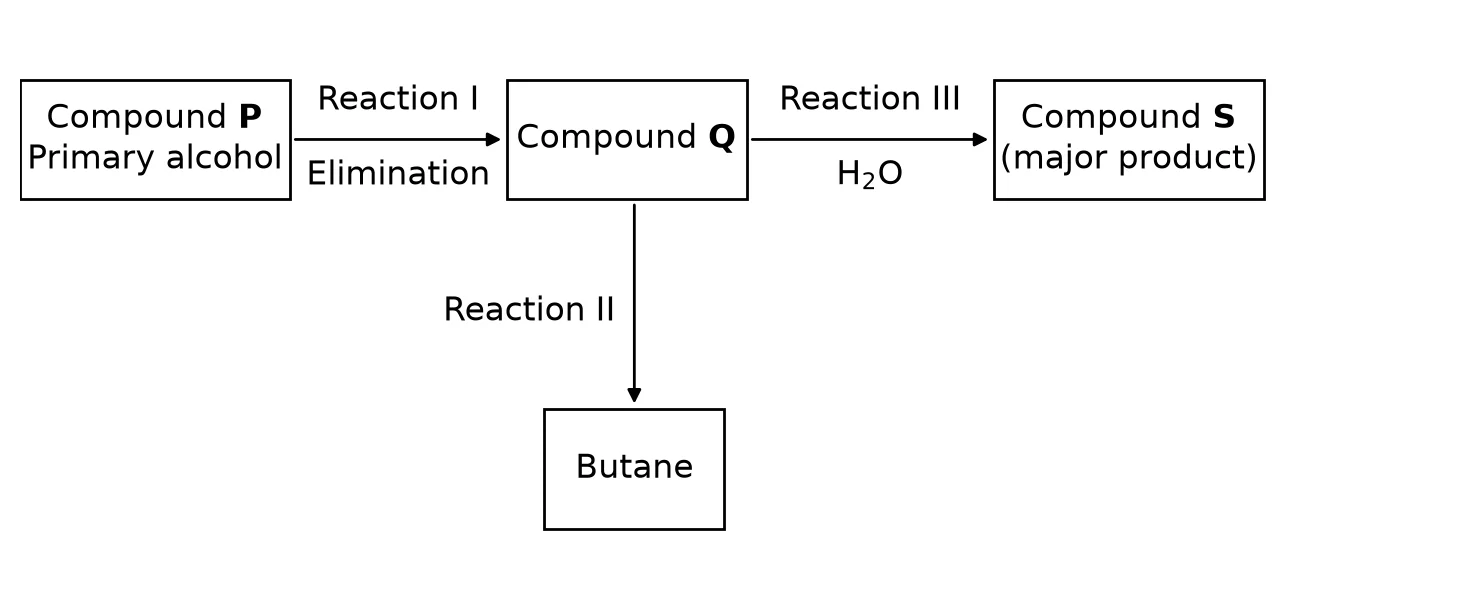
Work it out on paper first. Then mark yourself with the official memo, one tick at a time.
What's in Chemical Change Grade 10
Each skill is one thing a memo gives a tick for. Tap a skill for its own questions, notes and videos.
Physical and Chemical Change15 past paper questions
- Describe physical and chemical changeDecide whether a change is physical or chemical and give a reason (melting ice is physical, burning paper is chemical).6 past paper questions · 2 videos
- Use conservation of massShow that the total mass or number of atoms is the same before and after a reaction (no atoms are lost or gained).12 past paper questions · 2 videos
- Define stoichiometry terms and lawsGive the exact meaning of words like mole, molar mass, concentration and limiting reagent, or state a law in full.11 past paper questions · 3 videos
Representing Chemical Change33 past paper questions
- Write names and formulae of compoundsWrite the formula of a compound from its name, or the name from its formula (sodium chloride is NaCl).9 past paper questions · 4 videos
- Write a chemical equationWrite the correct formulae for the reactants and products of a reaction (hydrogen + oxygen → water as H₂ + O₂ → H₂O).9 past paper questions · 3 videos
- Balance a chemical equationAdd numbers in front of formulae so the atoms on both sides match (2H₂ + O₂ → 2H₂O).19 past paper questions · 2 videos
- Use conservation of massShow that the total mass or number of atoms is the same before and after a reaction (no atoms are lost or gained).12 past paper questions · 2 videos
- Use the mole ratioUse the numbers in a balanced equation to change moles of one substance into moles of another (2 mol H₂ makes 2 mol H₂O).45 past paper questions · 3 videos
Reactions in Aqueous Solution3 past paper questions
- Describe ions and reactions in solutionExplain how ionic solids dissolve in water and why the solution conducts electricity (NaCl(s) → Na⁺(aq) + Cl⁻(aq)).3 past paper questions · 4 videos
- Write precipitation reactions and ion testsPredict the solid formed when two solutions mix, or use a test to identify an ion (silver nitrate gives a white precipitate with chloride ions).3 videos
Stoichiometry48 past paper questions
- Use the mole ratioUse the numbers in a balanced equation to change moles of one substance into moles of another (2 mol H₂ makes 2 mol H₂O).45 past paper questions · 3 videos
- Define stoichiometry terms and lawsGive the exact meaning of words like mole, molar mass, concentration and limiting reagent, or state a law in full.11 past paper questions · 3 videos
- Calculate molar massAdd up the atomic masses in a formula to find molar mass in g/mol (H₂O is 2 × 1 + 16 = 18 g/mol).11 past paper questions · 4 videos
- Calculate number of molesCalculate number of moles from mass, particles or gas volume using n = m/M (36 g of water is 2 mol).56 past paper questions · 4 videos
- Calculate concentration of a solutionCalculate the concentration of a solution with c = n/V, volume in dm³, or work out a dilution (2 mol in 4 dm³ is 0,5 mol/dm³).37 past paper questions · 3 videos
- Determine empirical and molecular formulaeFind the simplest whole-number ratio of atoms in a compound from masses or percentages, then the molecular formula (CH₂O for glucose).18 past paper questions · 4 videos
More Chemical Change Grade 10 questions and answers
Try each one on paper before you open the memo.
1. Question 7.1 · November 2024 · Paper 2 · Provincial · 4 marks
7.1 Calculate the concentration of a solution prepared by dissolving g of sodium chloride in enough water to make a cm solution.(4)Show the memo (4 ticks)Memo
- ✓OPTION 1: Moles of NaCl
mol1 mark · Calculate number of moles
- ✓OPTION 1: Formula
- ✓OPTION 1: Substitution
- ✓OPTION 1: Answer with unit mol·dm
- ✓
2. Question 4.1.3 · November 2023 · Paper 2 · National (DBE) · 3 marks
4.1 Consider the cracking reaction below.Compound undergoes complete combustion.4.1.3 Using MOLECULAR FORMULAE, write down the balanced equation for this reaction.(3)Show the memo (3 ticks)Memo
- ✓Reactant:
1 mark · Write a chemical equation
- ✓Products
1 mark · Write a chemical equation
- ✓Balancing
1 mark · Balance a chemical equation
- ✓
3. Question 8.1.3 · November 2024 · Paper 2 · Provincial · 1 mark
8.1 A solution of nickel (II) nitrate is placed in a zinc container. It was observed, after some time, that a chemical reaction has taken place. The net ionic equation is:8.1.3 Give a reason why the nitrate ion () is not written in the net ionic equation above.(1)Show the memo (1 tick)Memo
- ✓Spectator ionNitrate ion () is a spectator ion / undergoes no changes in its oxidation state.
- ✓
4. Question 1.6 · November 2023 · Paper 2 · Provincial · 2 marks
Four options are provided as possible answers to the following questions. Each question has only ONE correct answer. Choose the answer and write only the letter (A–D) next to the question numbers (1.1 to 1.9) in the ANSWER BOOK, e.g. 1.10 D.1.6 Which of the following equations represents a chemical change?(2)Show the memo (1 tick)Memo
- ✓Correct optionIn a chemical change new substances form: water is decomposed into hydrogen and oxygen, so bonds inside the molecules break. A and D are phase changes (the same substance in another state) and C is dissolving, which are physical changes.
Answer: B2 marks · Describe physical and chemical change
- ✓
5. Question 1.4 · November 2024 · Paper 2 · Provincial · 2 marks
1.4 The molar mass of hydrated oxalic acid is g·mol.
The number of water molecules () present in the hydrated compound is ...(2)Show the memo (1 tick)Memo
- ✓Work back from the molar mass to x g·mol
Mass of water: g·mol
Answer: B2 marks · Calculate molar mass
- ✓
Chemical Change Grade 10 videos
Short lessons from South African teachers first. Videos load only when you tap play, to save your data.
Free on Android
Know exactly which skill is costing you marks.
Mark past papers tick by tick in the NavyBlue app. It remembers every mark you lose, shows you the skills to fix first, and picks your next questions.
Get NavyBlue free on Google Play
