Grade 10 Physical Sciences · Chemical Change
Define stoichiometry terms and laws
Give the exact meaning of words like mole, molar mass, concentration and limiting reagent, or state a law in full.
- past paper questions use it
- 11 past paper questions use it
- videos
- 3 videos
Learn it: define stoichiometry terms and laws
Pick one and watch it, then try the questions below. Videos load only when you tap play.
Now try it on a real exam question
No sign-up. Takes 3 minutes.
Question 7.1 · November 2025 · Paper 2 · Provincial · 2 marks
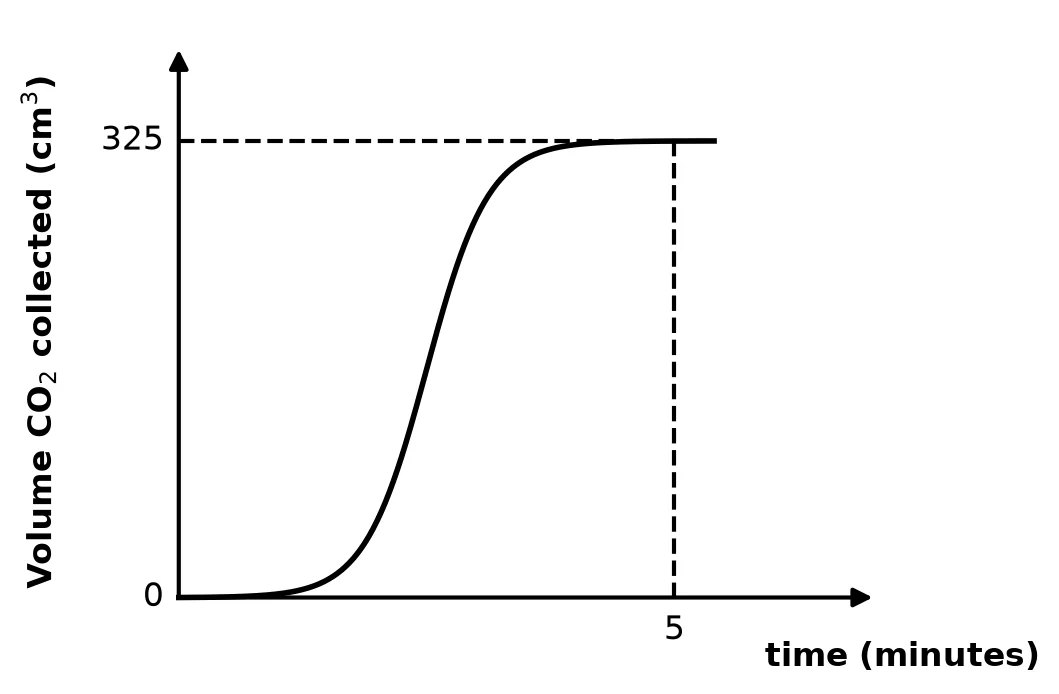
The calcium carbonate reacted completely in 5 minutes. The graph below shows the carbon dioxide gas that was collected at STP.
Calculate the:
Work it out on paper first. Then mark yourself with the official memo, one tick at a time.
More past paper questions: define stoichiometry terms and laws
Work each one out first, then open the memo and check every tick.
3. Question 6.3.1 · November 2025 · Paper 2 · Provincial · 2 marks
A certain organic compound () is composed of g of carbon; g of hydrogen and g of oxygen and has a molecular mass of g·mol.6.3 A bottle in a laboratory contains an unknown metal hydroxide (MOH). A lab technician dissolves g of the metal hydroxide to make a cm solution.
Upon analysis it was found that the concentration of the metal hydroxide is mol·dm.
Answer the questions that follow.6.3.1 Define the term concentration.(2)Show the memo (1 tick)Memo
- ✓Definition of concentrationThe amount of solute per litre of solution.
2 marks · Define stoichiometry terms and laws
- ✓
4. Question 6.2.1 · November 2024 · Paper 2 · Provincial · 2 marks
6.2 5 g of sodium carbonate () reacts with cm of hydrochloric acid (HC).
The percentage of hydrochloric acid (HC) that reacted with sodium carbonate () is %.6.2.1 Define the term limiting reagent.(2)Show the memo (1 tick)Memo
- ✓Definition of limiting reagentLimiting reagent is a reactant that is completely used up in a chemical reaction.
2 marks · Define stoichiometry terms and laws
- ✓
5. Question 5.1 · November 2023 · Paper 2 · Provincial · 2 marks
An unknown organic compound has a formula of . The molar mass of this compound is g·mol.5.1 Define the term empirical formula.(2)Show the memo (1 tick)Memo
- ✓Definition of empirical formulaThe simplest whole-number ratio of atoms in a compound.
2 marks · Define stoichiometry terms and laws
- ✓
6. Question 2.4.1 · November 2023 · Paper 2 · Provincial · 2 marks
Use the table of substances below to answer the following questions.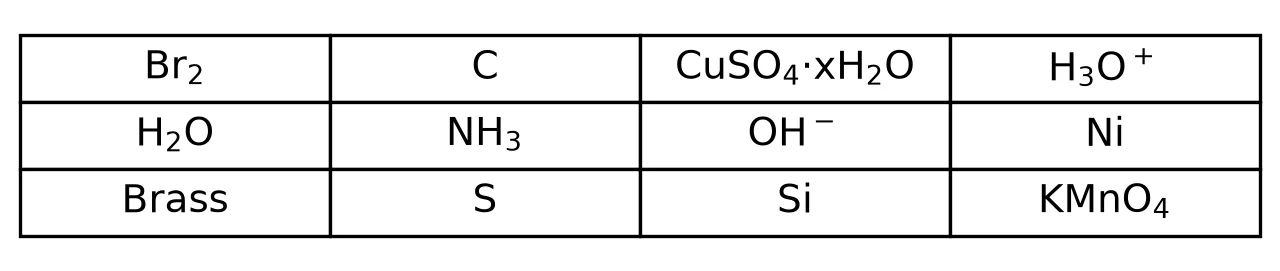 2.4 The experimental setup below is used to dry g hydrated blue copper(II) sulphate crystals, , to form g anhydrous salt.
Answer the questions that follow.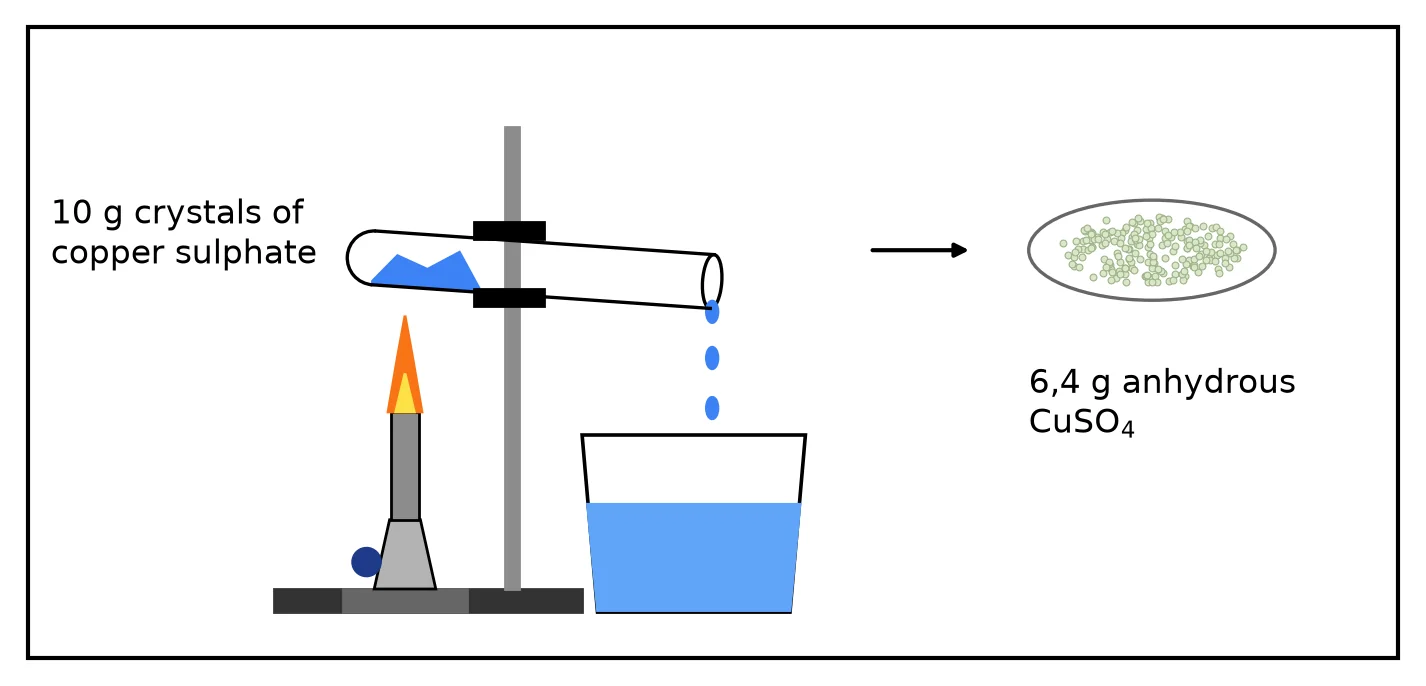 2.4.1 Define term anhydrous.(2)
Show the memo (1 tick)Memo
- ✓Definition of anhydrousFree of water.
2 marks · Define stoichiometry terms and laws
- ✓
Free on Android
Know exactly which skill is costing you marks.
Mark past papers tick by tick in the NavyBlue app. It remembers every mark you lose, shows you the skills to fix first, and picks your next questions.
Get NavyBlue free on Google Play
