Grade 10 Physical Sciences · Chemical Change
Use the mole ratio
Use the numbers in a balanced equation to change moles of one substance into moles of another (2 mol H₂ makes 2 mol H₂O).
- past paper questions use it
- 45 past paper questions use it
- videos
- 3 videos
Learn it: use the mole ratio
Pick one and watch it, then try the questions below. Videos load only when you tap play.
Now try it on a real exam question
No sign-up. Takes 3 minutes.
Question 5.2 · May/June 2023 · Paper 2 · National (DBE) · 2 marks
The graph below shows how the concentrations of (g) and (g) change with time.
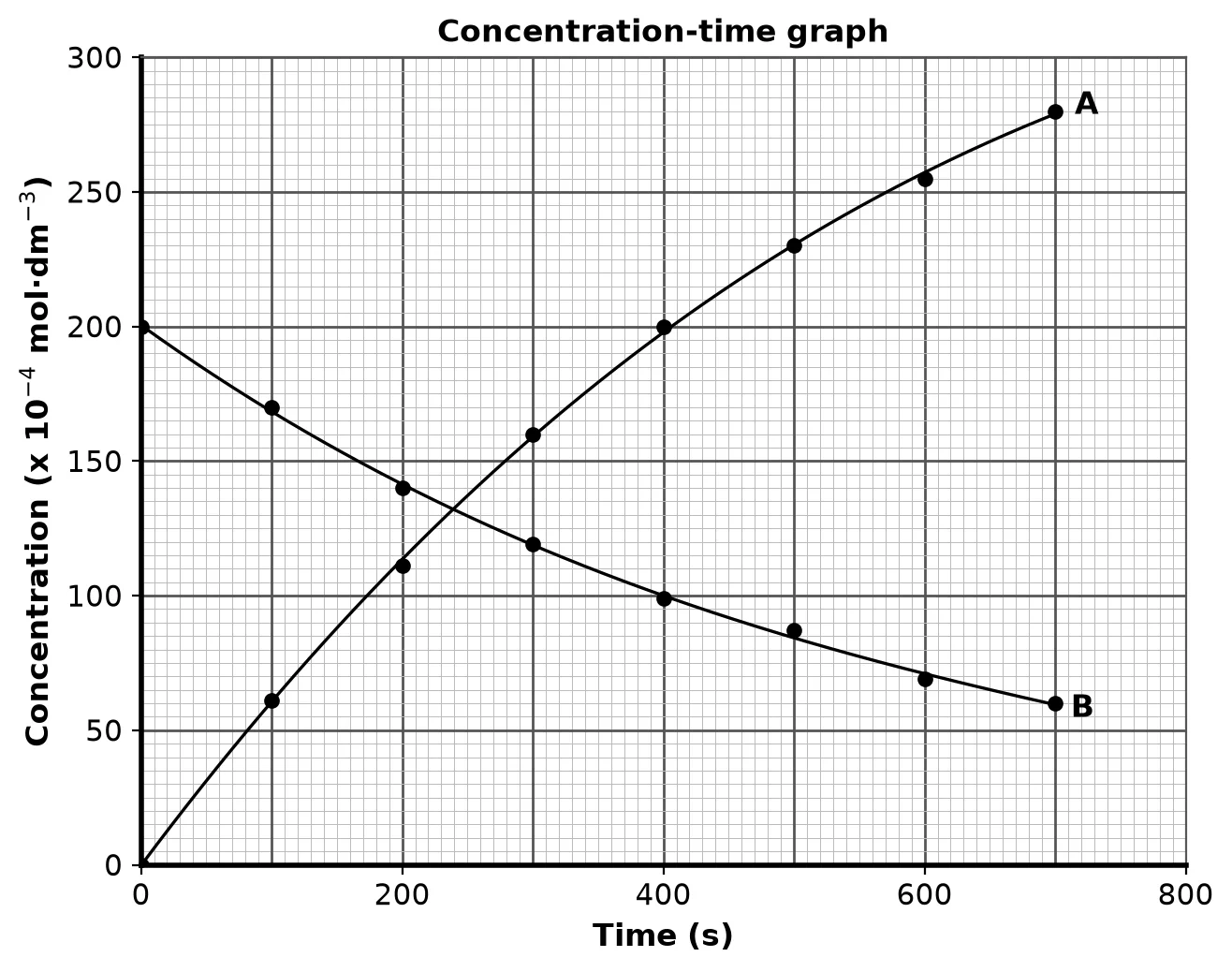
The rate of decomposition of (g) is half the rate of formation of (g).
Is this statement TRUE or FALSE? Give a reason for the answer.(2)
Work it out on paper first. Then mark yourself with the official memo, one tick at a time.
More past paper questions: use the mole ratio
Work each one out first, then open the memo and check every tick.
3. Question 5.2.2 · November 2025 · Paper 2 · National (DBE) · 5 marks
5.2 Carbon monoxide, CO(g), reacts with oxygen, (g), to form carbon dioxide, (g), in a sealed container according to the balanced equation:
The graph below shows the concentration of (g) versus time.
Answer the questions that follow.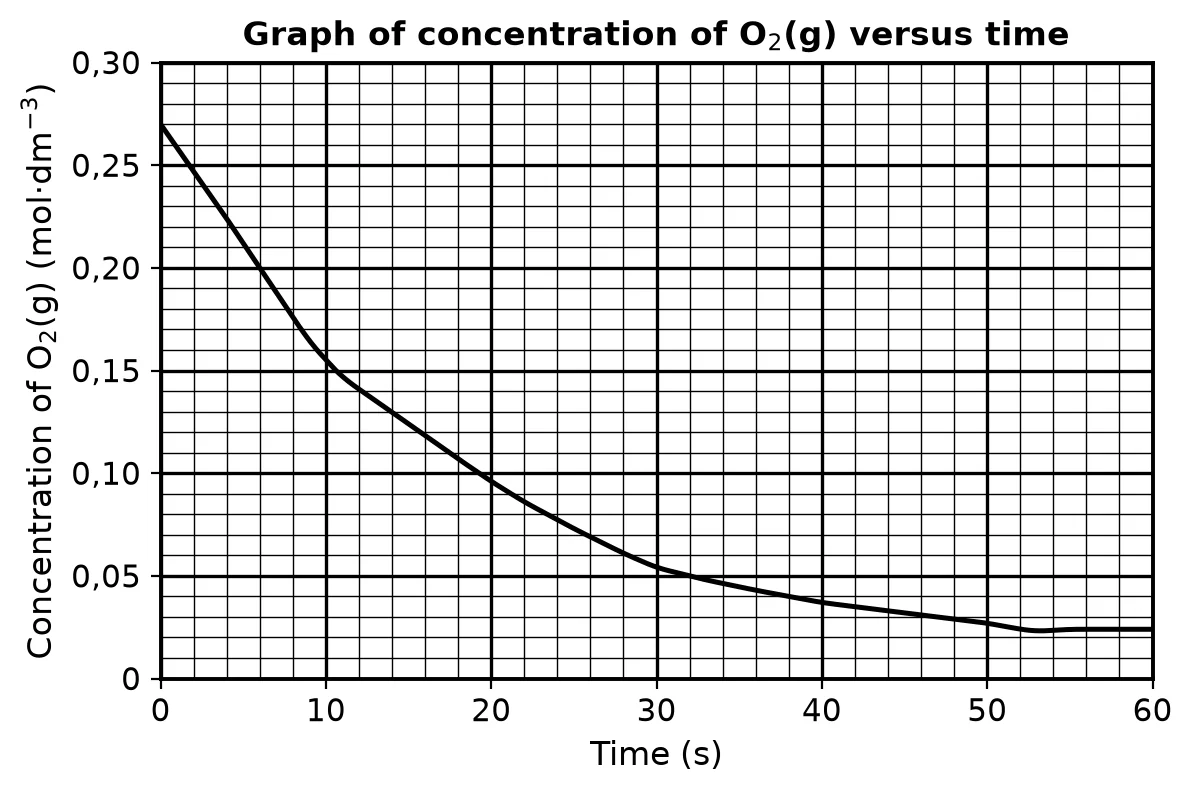 5.2.2 The reaction takes place in a dm container. Calculate the average rate (in mol·s) at which (g) is formed in the first 10 s.(5)
Show the memo (5 ticks)Memo
- ✓(a) Calculate the change in concentrationRate
1 mark · Calculate reaction rate
- ✓(b) Substitute 10 s
mol·dm·s1 mark · Calculate reaction rate
- ✓(c) Multiply by 3 dm3Rate () in mol·s mol·s
- ✓(d) Use the mol ratioRate () rate ()
1 mark · Use the mole ratio
- ✓(e) Final answer (mol·s)
1 mark · Use the mole ratio
- ✓
4. Question 2.3.2 · November 2025 · Paper 2 · National (DBE) · 5 marks
The letters A to G in the table below represent organic compounds.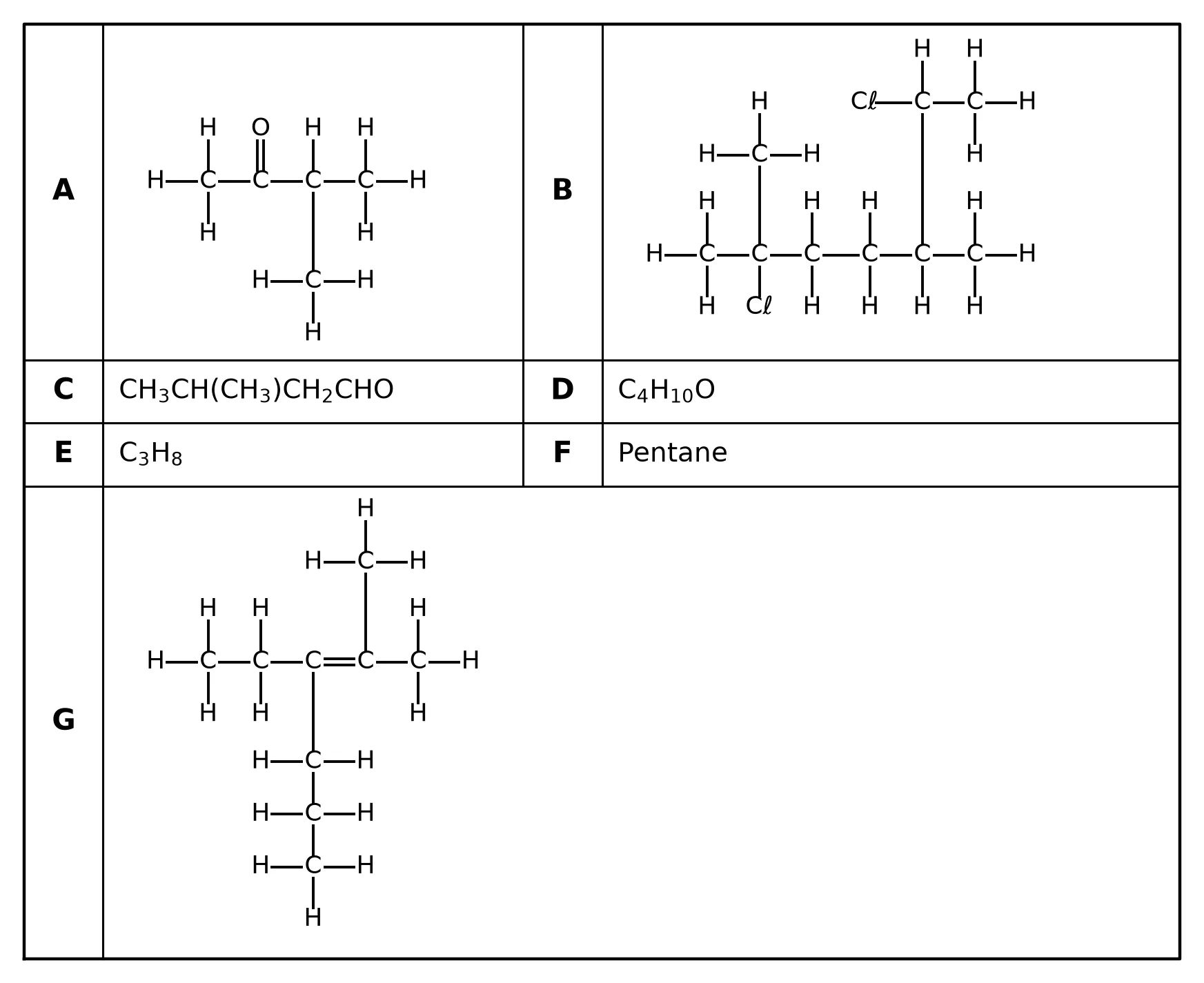 2.3 Compound E, (g), reacts with oxygen, (g), according to the balanced equation:
Initially cm of compound E and cm of oxygen were injected into a container of adjustable volume and allowed to react, as shown below.
Answer the questions that follow.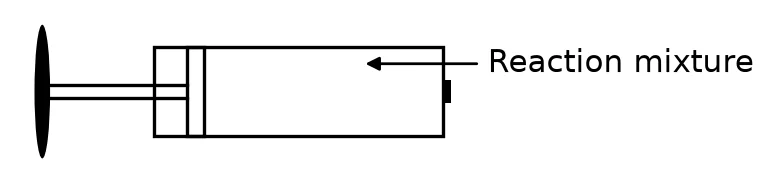 2.3.2 Calculate the TOTAL volume of the GASES present in the container at the end of the reaction.(5)
Show the memo (5 ticks)Memo
- ✓(a) Volume of O2 used (with volume of C3H8) cm
1 mark · Use the mole ratio
- ✓(b) Volumes of CO2 and H2O produced cm
cm1 mark · Use the mole ratio
- ✓(c) Volume of O2 remaining cm
1 mark · Identify the limiting reagent
- ✓(d) Addition of the three volumesVolume of gas in the container
1 mark · Identify the limiting reagent
- ✓(e) Final answerTotal volume of gas in the container cm (or dm)
1 mark · Identify the limiting reagent
- ✓
5. Question 7.2.1 · May/June 2023 · Paper 2 · National (DBE) · 3 marks
7.2 A hydrochloric acid solution, HCℓ(aq), is standardised by titrating it against cm of a mol·dm sodium carbonate solution (aq). At the endpoint, it is found that cm of HCℓ(aq) has reacted.
The balanced equation for the reaction is:
Answer the questions that follow.7.2.1 Calculate the concentration of the HCℓ(aq).(3)Show the memo (3 ticks)Memo
- ✓Substitute 0,04 mol·dm⁻³, 25 cm³ and 19,5 cm³
1 mark · Do titration calculations
- ✓Use mol ratio n(Na2CO3) : n(HCℓ) = 1 : 2
1 mark · Use the mole ratio
- ✓Final answer mol·dm ()
1 mark · Do titration calculations
- ✓
6. Question 9.4 · May/June 2024 · Paper 2 · National (DBE) · 5 marks
The simplified diagram below represents the cell used for electroplating ornaments with silver, Ag. P and Q are the two terminals of the battery.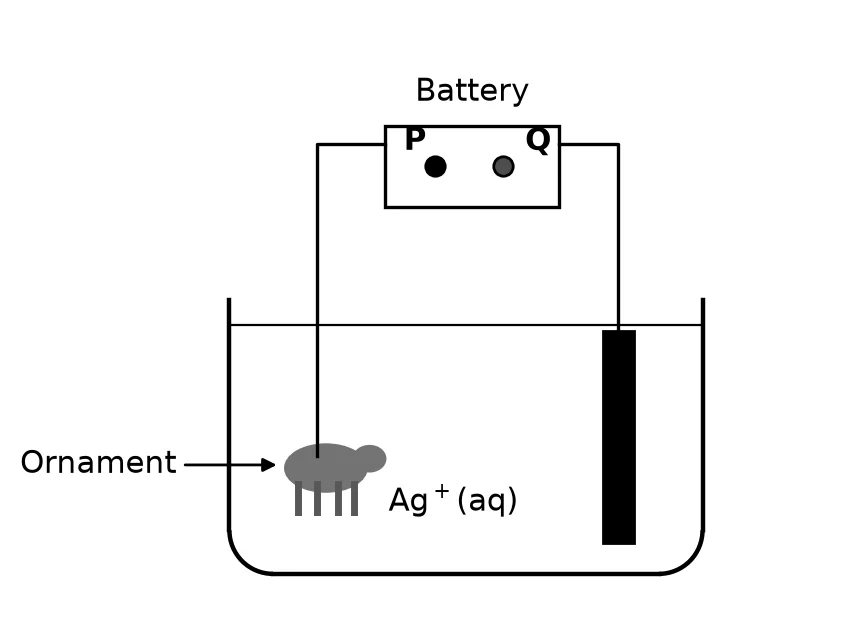 9.4 Calculate the current needed to electroplate the ornament with g of silver in minutes.(5)
Show the memo (5 ticks)Memo
- ✓Moles of silver mol
1 mark · Calculate number of moles
- ✓Moles of electrons:
1 mark · Use the mole ratio
- ✓Substitute Avogadro's number
C1 mark · Calculate number of moles
- ✓Substitute the time
- ✓Final answer A
- ✓
Free on Android
Know exactly which skill is costing you marks.
Mark past papers tick by tick in the NavyBlue app. It remembers every mark you lose, shows you the skills to fix first, and picks your next questions.
Get NavyBlue free on Google Play
