Grade 11 Physical Sciences · Chemical Change
Interpret the energy change of reactions
Decide if a reaction is exothermic or endothermic from ΔH or an energy graph, and calculate ΔH or activation energy (burning releases heat, so ΔH < 0).
- past paper questions use it
- 21 past paper questions use it
- videos
- 3 videos
Learn it: interpret the energy change of reactions
Pick one and watch it, then try the questions below. Videos load only when you tap play.
Now try it on a real exam question
No sign-up. Takes 3 minutes.
Question 1.6 · November 2025 · Paper 2 · National (DBE) · 2 marks
The activation energy for the reverse reaction is kJ·mol.
Which ONE of the following is possible for the reaction above?(2)
Work it out on paper first. Then mark yourself with the official memo, one tick at a time.
More past paper questions: interpret the energy change of reactions
Work each one out first, then open the memo and check every tick.
3. Question 5.1.3 · May/June 2024 · Paper 2 · National (DBE) · 2 marks
The reaction between aluminium and EXCESS sulphuric acid is used to investigate factors affecting rates of reactions.5.1 INVESTIGATION I
The effect of a catalyst on the rate of reaction is determined.
Aluminium powder of mass 5 g reacts with excess mol·dm at °C.
Consider the following energy diagrams (not drawn to scale) for this investigation. X and Y in diagram B represent the activation energies.
Answer the questions that follow.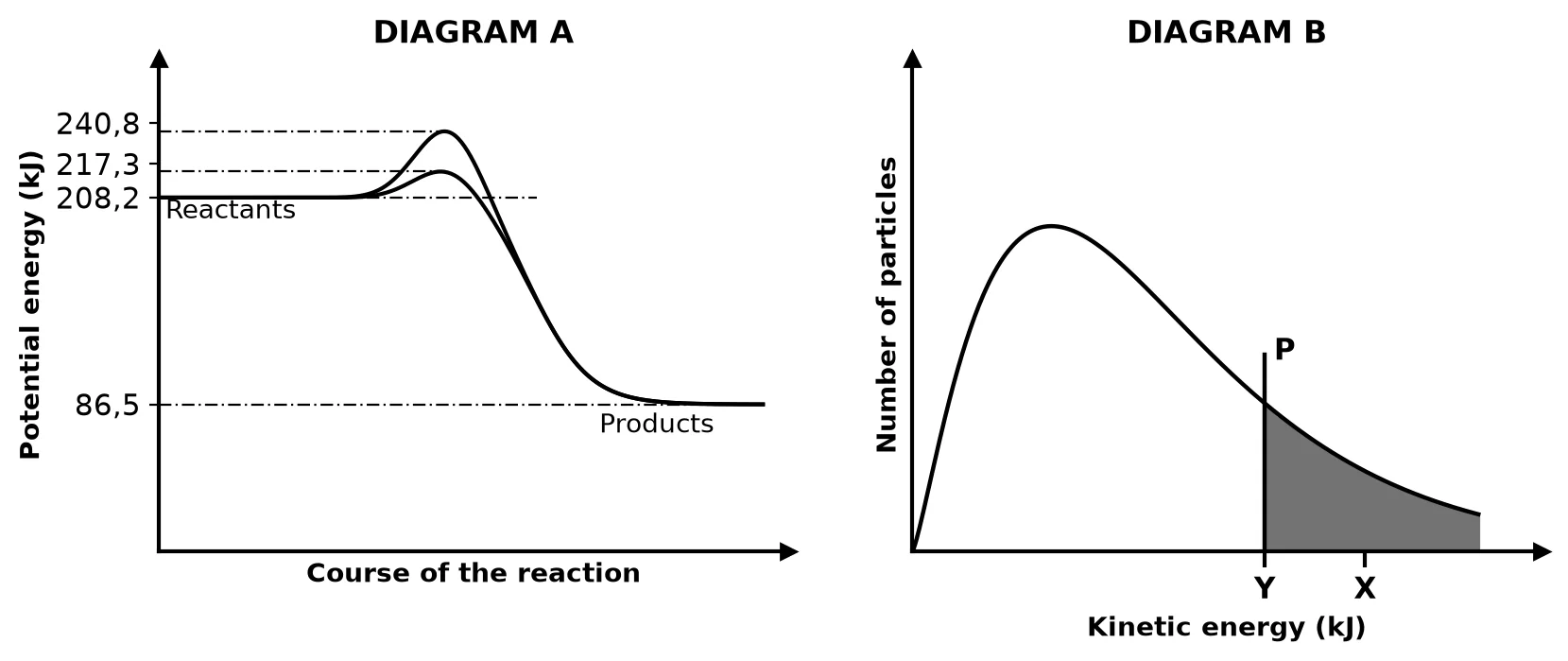 5.1.3 Determine the numerical value represented by the letter X on diagram B.(2)
Show the memo (2 ticks)Memo
- ✓Subtraction
- ✓Answer (kJ)
- ✓
4. Question 6.5.1 · November 2023 · Paper 2 · National (DBE) · 3 marks
Consider the following hypothetical reaction reaching equilibrium in a dm closed container at °C.
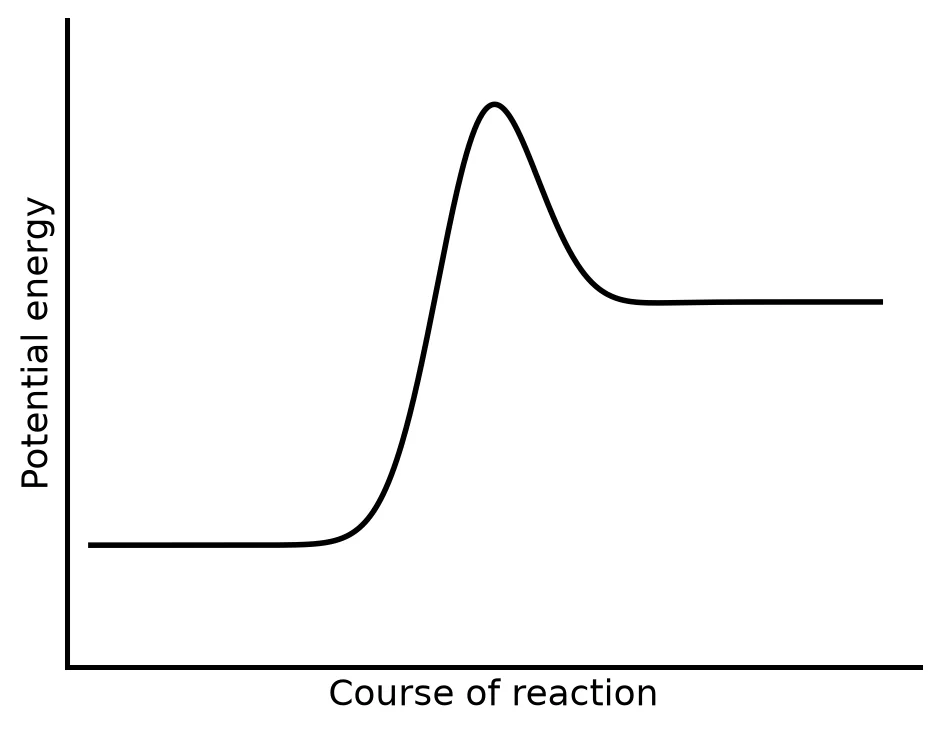
The graph below shows the changes in the amounts of reactants and products over time.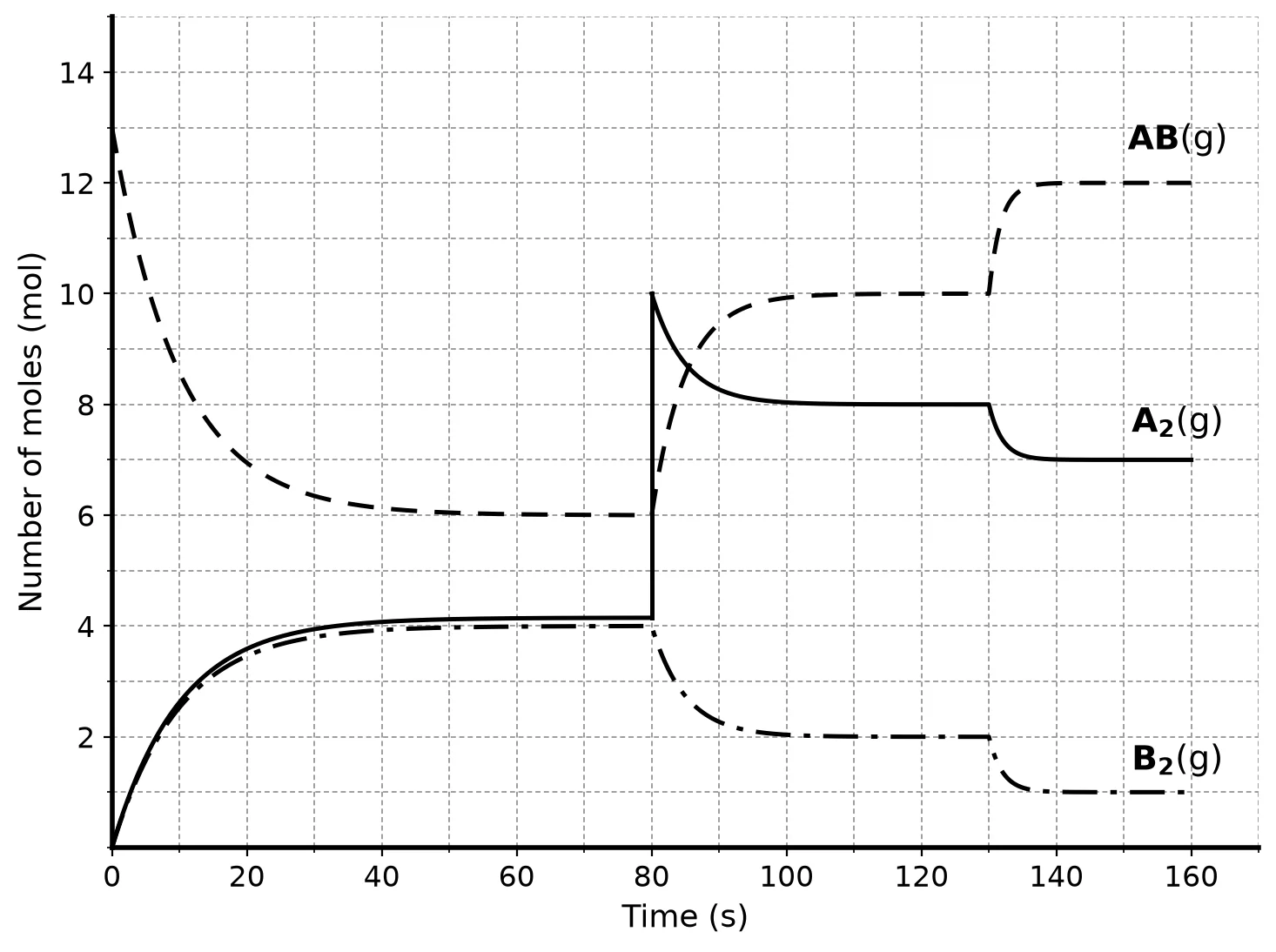 6.5 At t = s the temperature of the system is decreased to °C.6.5.1 Draw a potential energy diagram for this reaction.(3)
Show the memo (2 ticks)Memo
- ✓Both axes correctly labelled and shape of Ep curveVertical axis: Potential energy. Horizontal axis: Course of reaction. A curve that rises to a peak (activated complex) and then falls.
- ✓Shape of Ep curve for an endothermic reactionThe products end at a HIGHER potential energy than the reactants (endothermic curve).
2 marks · Interpret the energy change of reactions
- ✓
5. Question 1.5 · May/June 2023 · Paper 2 · National (DBE) · 2 marks
1.5 The potential energy diagram for a chemical reaction is shown below.
Which ONE of the following combinations is CORRECT for the FORWARD reaction?(2)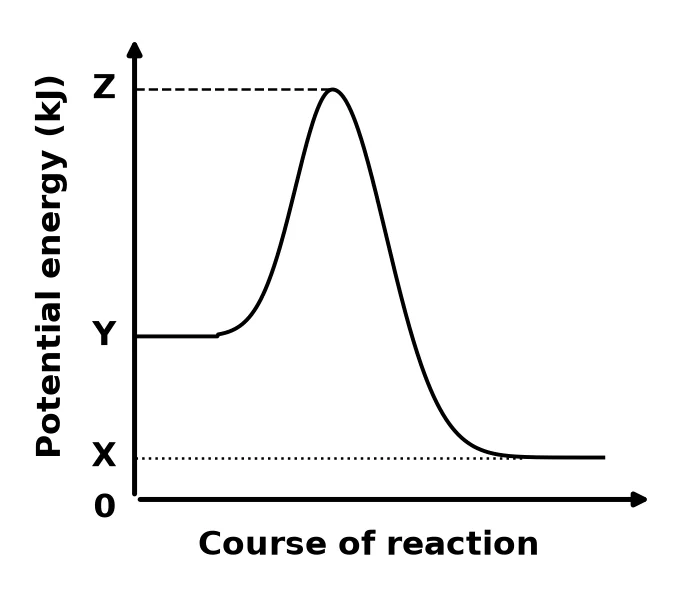
Show the memo (1 tick)Memo
- ✓Read ΔH, Ea and the activated complex from the profileReactants are at Y, products at X, the peak at Z.
(negative: exothermic).
(forward) = peak − reactants = .
The activated complex sits at the top of the curve, so its potential energy is Z.
Answer: C2 marks · Interpret the energy change of reactions
- ✓
6. Question 1.5 · May/June 2022 · Paper 2 · National (DBE) · 2 marks
1.5 The equation below represents a hypothetical reaction.
kJ·mol
The activation energy for the REVERSE reaction is kJ·mol.
Which ONE of the following is the activation energy (in kJ·mol) for the FORWARD reaction?(2)Show the memo (1 tick)Memo
- ✓Ea(forward) = ΔH + Ea(reverse)
kJ·mol
Answer: B2 marks · Interpret the energy change of reactions
- ✓
Free on Android
Know exactly which skill is costing you marks.
Mark past papers tick by tick in the NavyBlue app. It remembers every mark you lose, shows you the skills to fix first, and picks your next questions.
Get NavyBlue free on Google Play
