Grade 12 Physical Sciences · Matter and Materials · Paper 2 (Chemistry)
Organic Chemistry Grade 12
Real Organic Chemistry past paper questions and answers from 2024 to 2025, with each memo split into the ticks examiners give. Try one, mark yourself, and see exactly which skill cost you marks.
- past paper questions
- 471 past paper questions
- skills
- 15 skills
- videos
- 15 videos
Try a Organic Chemistry exam question
No sign-up. Takes 3 minutes.
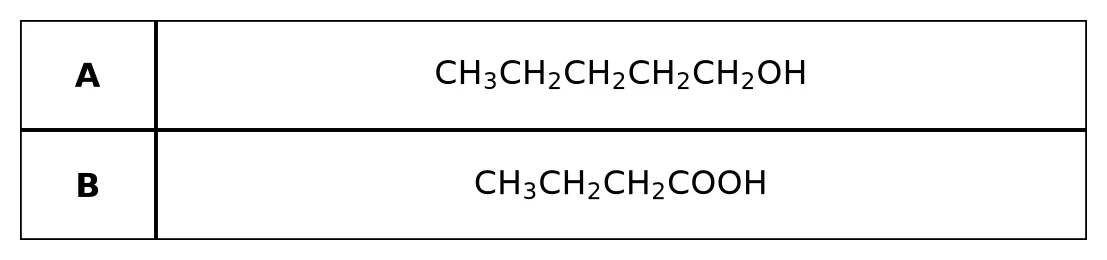
Question 3.2 · May/June 2025 · Paper 2 · National (DBE) · 4 marks
Fully explain the answer.(4)
Work it out on paper first. Then mark yourself with the official memo, one tick at a time.
Organic Chemistry skills
Each skill is one thing a memo gives a tick for. Tap one for its own questions, notes and videos.
- Identify the intermolecular forcesName the type of force between molecules, such as London forces, dipole-dipole forces or hydrogen bonds (water has hydrogen bonds).25 past paper questions · 3 videos
- Define organic chemistry termsGive the exact meaning of organic chemistry words like hydrocarbon, functional group, homologous series and saturated compound.22 past paper questions · 3 videos
- Identify functional group and seriesIdentify the functional group and homologous series of an organic compound (ethanol has an -OH group, so it is an alcohol).84 past paper questions · 3 videos
- Write IUPAC namesGive the correct IUPAC name of an organic compound from its structure (CH₃CH₂OH is ethanol).63 past paper questions · 4 videos
- Draw structural formulaeDraw the structural formula, or write the condensed or molecular formula, of an organic compound from its name (propane is C₃H₈).57 past paper questions · 3 videos
- Identify and draw structural isomersRecognise or draw compounds with the same molecular formula but a different structure (butane and methylpropane are both C₄H₁₀).40 past paper questions · 3 videos
- Explain organic boiling point trendsExplain why organic compounds have different boiling points using chain length, branching or functional group (longer chains boil at higher temperatures).56 past paper questions · 4 videos
- Write addition reactions and conditionsWrite addition reactions where atoms are added across a double bond, and give their conditions (ethene + H₂O → ethanol).45 past paper questions · 3 videos
- Write elimination reactions and conditionsWrite elimination reactions where a small molecule is removed to form a double bond, and give their conditions (ethanol → ethene + H₂O).43 past paper questions · 3 videos
- Write substitution reactions and conditionsWrite substitution reactions where one atom or group replaces another, and give their conditions (bromoethane + NaOH → ethanol).29 past paper questions · 3 videos
- Write esterification reactionsWrite the reaction of an alcohol with a carboxylic acid to make an ester, and name the ester (ethanol + ethanoic acid → ethyl ethanoate).33 past paper questions · 3 videos
- Identify variables in an investigationName the independent, dependent and controlled variables in an experiment (in a test of temperature on reaction rate, temperature is independent).50 past paper questions · 3 videos
- Write investigative question or conclusionWrite an investigative question, hypothesis or conclusion that links two variables (How does the length of a wire affect its resistance?).38 past paper questions · 3 videos
- Describe and evaluate an experimentName apparatus, describe or explain steps of a method, and give safety precautions (repeat readings and work out an average).18 past paper questions · 3 videos
- Read a graph of resultsRead values from a graph or table of results, or calculate a gradient (finding resistance from the gradient of a V-I graph).38 past paper questions · 3 videos
More Organic Chemistry Grade 12 questions and answers
Try each one on paper before you open the memo.
4. Question 4.1.3 · November 2025 · Paper 2 · National (DBE) · 2 marks
4.1 Study the three organic reactions I, II and III below. Compounds T and W are organic compounds. R and S are inorganic substances. Consider only the major products.
Reaction I:
Reaction II:
Reaction III:
Write down the:4.1.3 TWO names for the type of reaction in reaction I(2)Show the memo (2 ticks)Memo
- ✓General typeAddition
- ✓Specific typeHydrohalogenation / Hydrobromination
- ✓
5. Question 2.6.2 · May/June 2025 · Paper 2 · National (DBE) · 2 marks
The letters A to F in the table below represent organic compounds.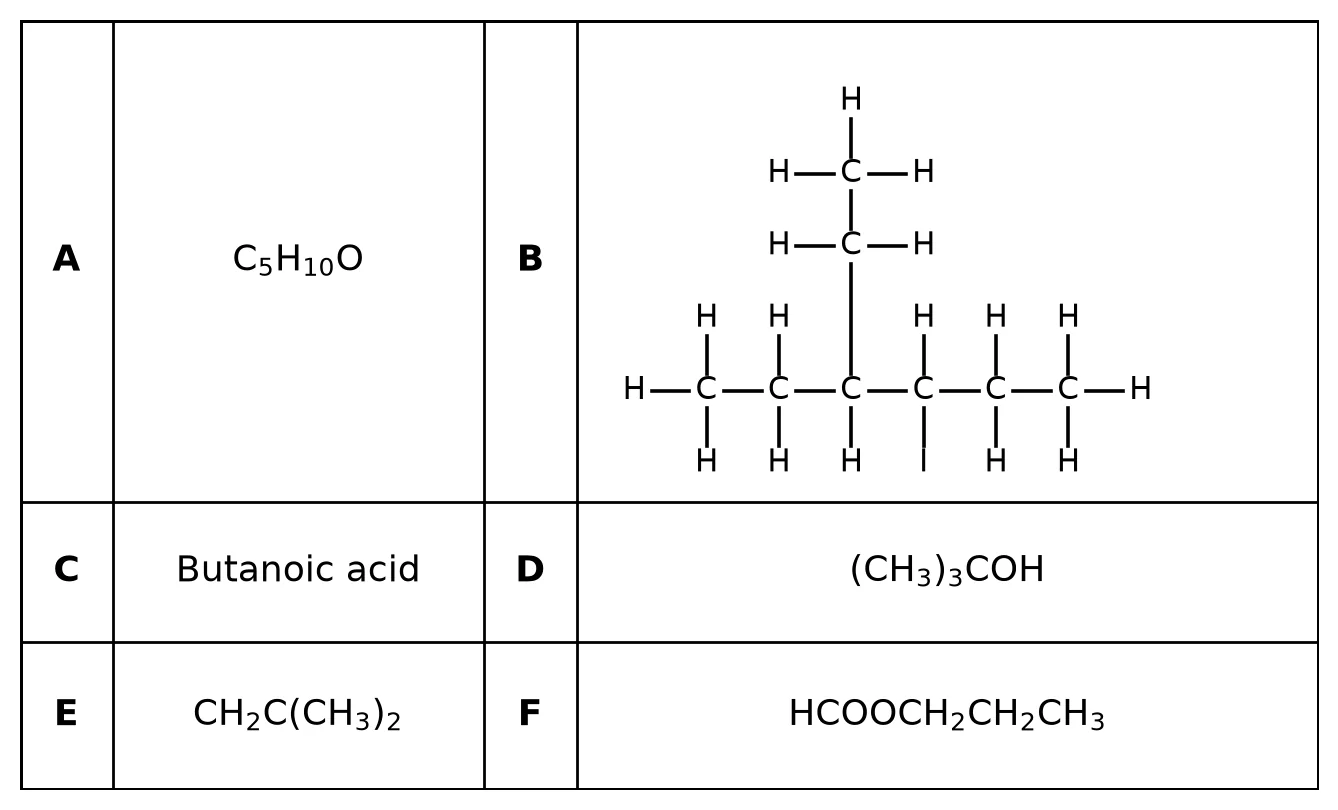 2.6 Ethanol reacts with compound C to form an organic compound Z.
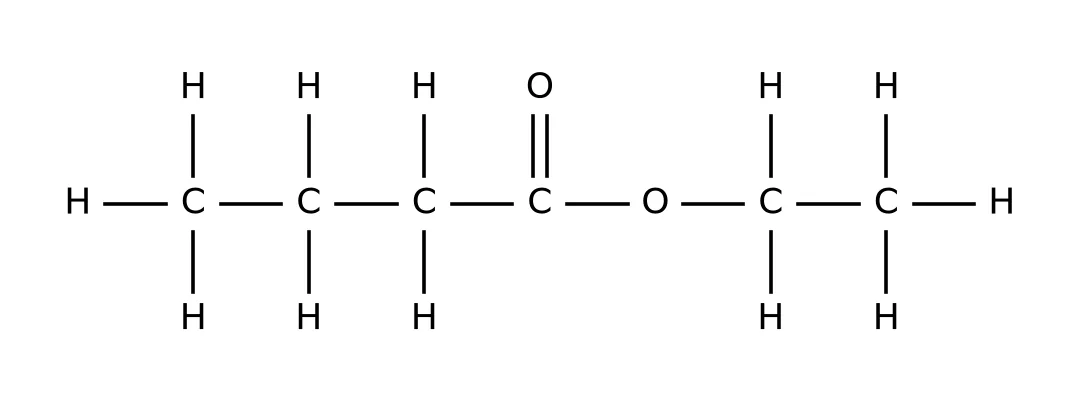
Write down the:2.6.2 STRUCTURAL FORMULA of compound Z(2)Show the memo (2 ticks)Memo
- ✓Functional group correctZ is ethyl butanoate. The ester functional group –COO– joins the butanoate part (4 C, from butanoic acid) to the ethyl part (2 C, from ethanol): C=O and C–O–C.
1 mark · Write esterification reactions
- ✓Whole structure correct drawn with ALL bonds and H atoms shown (see the memo structure).
1 mark · Draw structural formulae
- ✓
6. Question 10.3.2 · May/June 2025 · Paper 1 · National (DBE) · 4 marks
Light of different frequencies is incident on a metal plate. The sketch graph below shows the relationship between the maximum kinetic energy, , of the photoelectrons and the energy of the incident photons.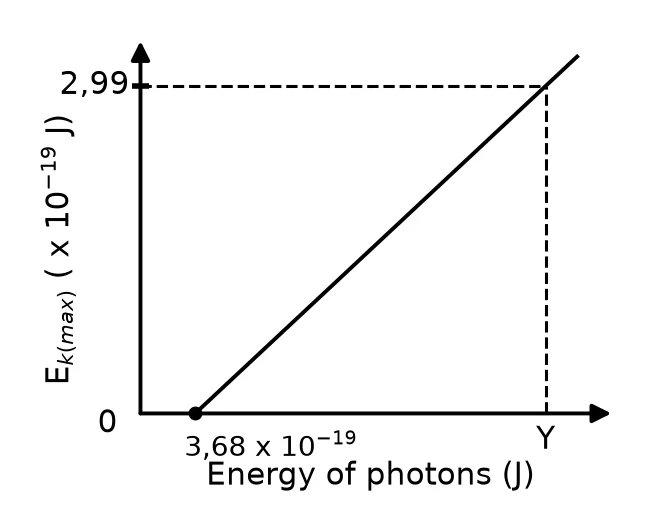 10.3 Calculate the:10.3.2 Value of Y(4)
Show the memo (4 ticks)Memo
- ✓METHOD 1: Formula (or )
1 mark · Use the photoelectric equation
- ✓METHOD 1: Work function
1 mark · Use the photoelectric equation
- ✓METHOD 1: Kinetic energy
1 mark · Use the photoelectric equation
- ✓METHOD 1: Answer (J)
1 mark · Use the photoelectric equation
- ✓
7. Question 4.2.1 · November 2025 · Paper 1 · National (DBE) · 3 marks
Cricketers at an academy conduct an experiment to determine the relationship between the contact time and the final momentum of a ball for a constant average net force.
A cricket ball of mass g is thrown horizontally with a certain initial velocity and is struck by a bat so that the ball moves in the opposite direction, as shown in the diagram below. The average net force acting on the ball is horizontal.
The experiment is repeated using the same ball. The average net force and the initial velocity of the ball are kept constant. The contact time between the bat and the ball is changed EACH time. The results obtained are shown in the sketch graph below.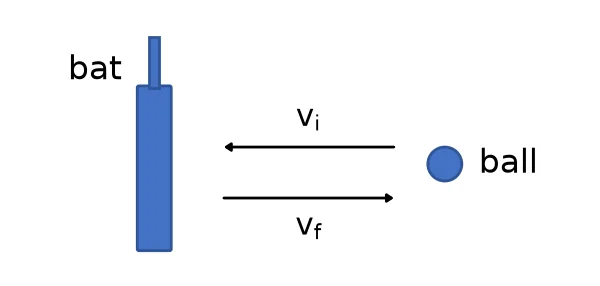
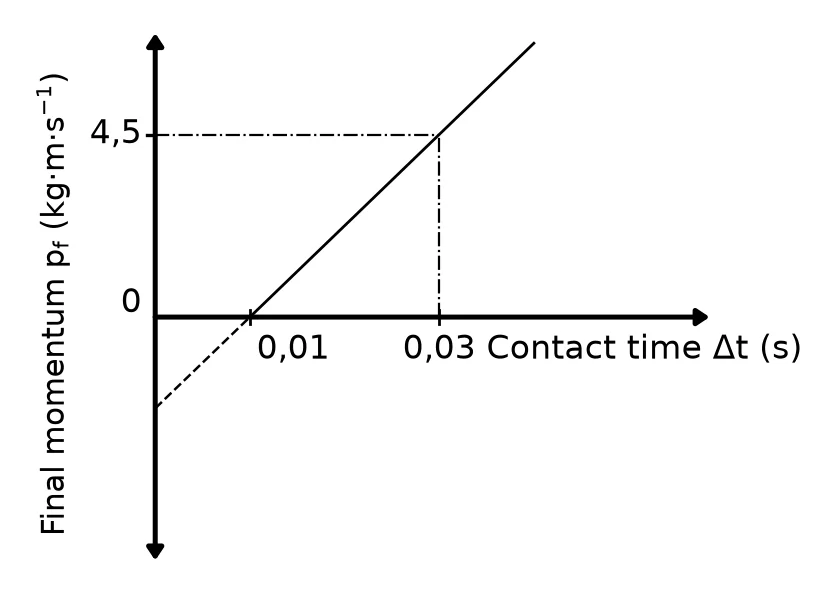 4.2 Calculate the:4.2.1 Average net force acting on the ball(3)
Show the memo (3 ticks)Memo
- ✓METHOD 1: Change in final momentum (numerator)Gradient
1 mark · Read a graph of results
- ✓METHOD 1: Change in contact time (denominator) N
1 mark · Read a graph of results
- ✓METHOD 1: Answer with direction N to the right / opposite to the original direction of the ball
1 mark · Read a graph of results
- ✓
8. Question 3.4.2 · May/June 2024 · Paper 2 · National (DBE) · 2 marks
The boiling points of some organic compounds are shown in the table below. The atmospheric pressure is kPa.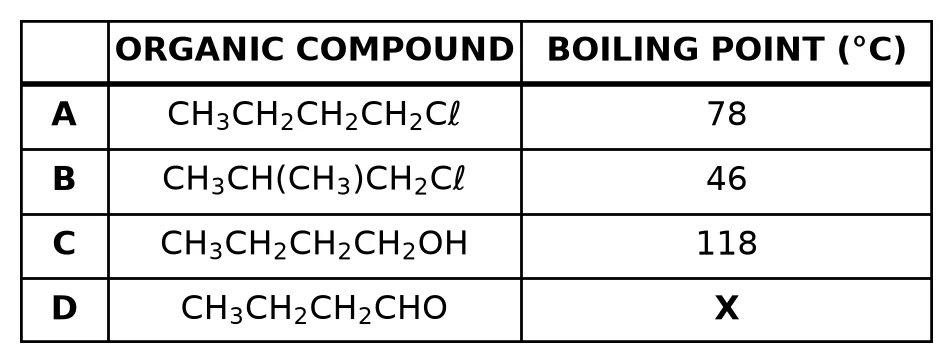 3.4 Consider the boiling points below.
 3.4.2 Fully explain the answer to QUESTION 3.4.1.(2)
Show the memo (2 ticks)Memo
- ✓Intermolecular forcesC (/butanol) has stronger intermolecular forces than D (/butanal).
OR D has weaker intermolecular forces than C.
OR A () is a more polar molecule than D, increasing the intermolecular forces.
OR The electron density of A is greater than D, increasing the intermolecular forces.1 mark · Explain organic boiling point trends
- ✓EnergyMore energy is needed to overcome or break the intermolecular forces (of C / of A).
OR Less energy is needed to overcome the intermolecular forces of D.
Accept: Boiling point of C will be more (in relation to C and D/ °C vs °C). Accept: Boiling point of D will be less (in relation to A and D).1 mark · Explain organic boiling point trends
- ✓
9. Question 3.3.2 · November 2024 · Paper 2 · National (DBE) · 4 marks
The vapour pressures of different organic compounds are determined at °C. The vapour pressures of compounds A, B and C are NOT shown in the table.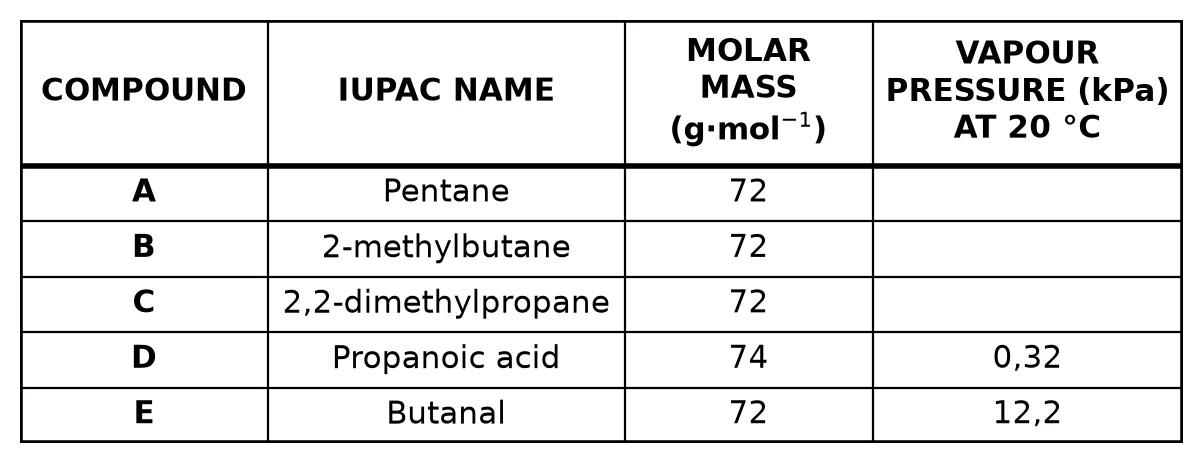 3.3 Compounds D and E are compared.3.3.2 Fully explain the difference in the vapour pressures between compounds D and E.(4)
Show the memo (4 ticks)Memo
- ✓Strongest IMF in D: hydrogen bondingCompound D / propanoic acid has hydrogen bonding (dipole-dipole and London forces) between molecules.
1 mark · Explain organic boiling point trends
- ✓Strongest IMF in E: dipole-dipoleCompound E / butanal has dipole-dipole forces (and London forces) between molecules.
1 mark · Explain organic boiling point trends
- ✓Compare strength of IMFIntermolecular forces between molecules of compound D / propanoic acid are stronger than intermolecular forces between molecules of compound E / butanal.
1 mark · Explain organic boiling point trends
- ✓Compare energy neededMore energy is needed to overcome/break intermolecular forces between molecules of compound D / propanoic acid than in compound E / butanal.
OR: Less energy is needed to overcome/break intermolecular forces between molecules of compound E / butanal than in compound D / propanoic acid.1 mark · Explain organic boiling point trends
- ✓
10. Question 2.4.1 · May/June 2024 · Paper 2 · National (DBE) · 3 marks
The letters A to H in the table below represent eight organic compounds.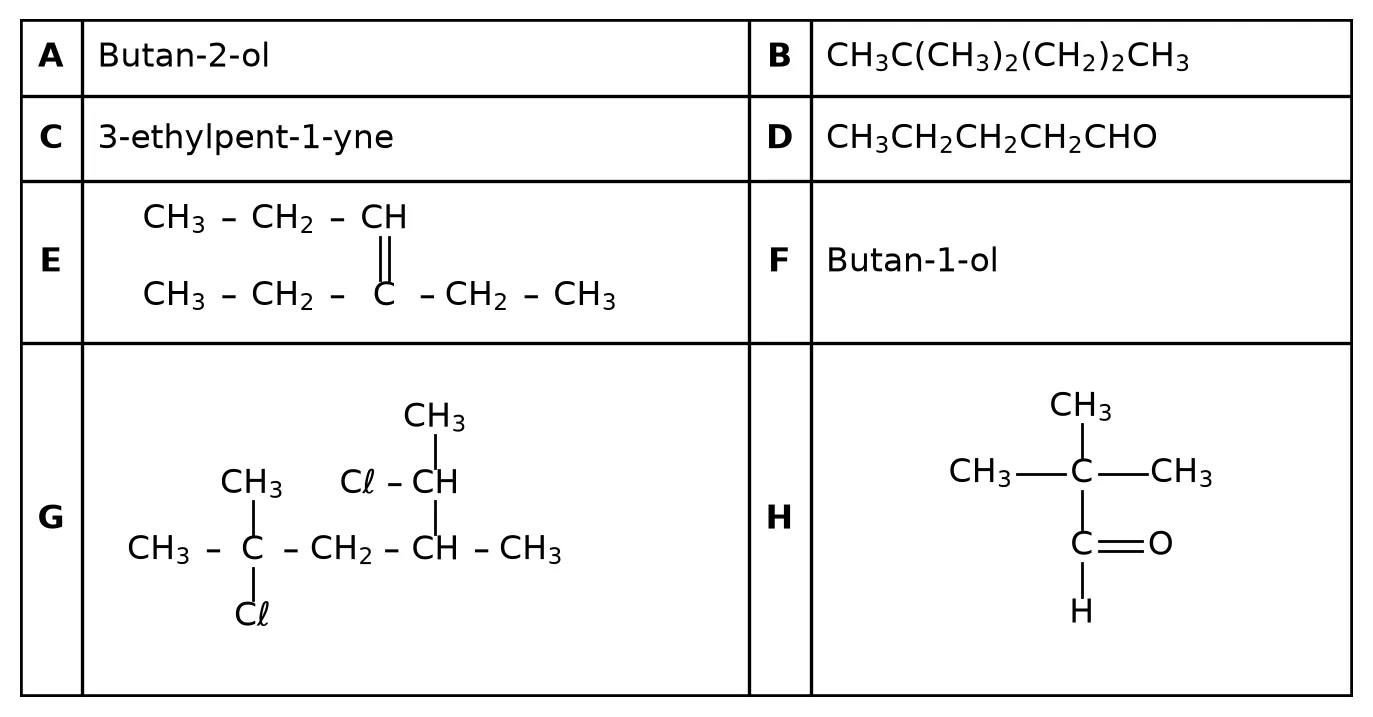 2.4 Write down the IUPAC name of compound:2.4.1 E(3)
Show the memo (3 ticks)Memo
- ✓Correct stemhexene (3-ethylhex-3-ene)
1 mark · Write IUPAC names
- ✓Substituentethyl
1 mark · Write IUPAC names
- ✓Name completely correct3-ethylhex-3-ene (3-ethyl-3-hexene)
1 mark · Write IUPAC names
- ✓
Organic Chemistry Grade 12 videos
Short lessons from South African teachers first. Videos load only when you tap play, to save your data.
Free on Android
Know exactly which skill is costing you marks.
Mark past papers tick by tick in the NavyBlue app. It remembers every mark you lose, shows you the skills to fix first, and picks your next questions.
Get NavyBlue free on Google Play
