Grade 12 Physical Sciences · Matter and Materials
Write elimination reactions and conditions
Write elimination reactions where a small molecule is removed to form a double bond, and give their conditions (ethanol → ethene + H₂O).
- past paper questions use it
- 22 past paper questions use it
- videos
- 3 videos
Learn it: write elimination reactions and conditions
Pick one and watch it, then try the questions below. Videos load only when you tap play.
Now try it on a real exam question
No sign-up. Takes 3 minutes.
Question 1.3 · November 2024 · Paper 2 · National (DBE) · 2 marks
Reaction 1: Compound P (major product) +
Reaction 2: Compound P Compound Q
Which ONE of the following combinations is the CORRECT IUPAC names of compounds P and Q?(2)
Work it out on paper first. Then mark yourself with the official memo, one tick at a time.
More past paper questions: write elimination reactions and conditions
Work each one out first, then open the memo and check every tick.
3. Question 4.2.7 · November 2023 · Paper 2 · National (DBE) · 2 marks
4.2 Consider the equations for reactions I to III below.
A and B represent organic compounds that are POSITIONAL ISOMERS.
X is an inorganic product.
Write down the: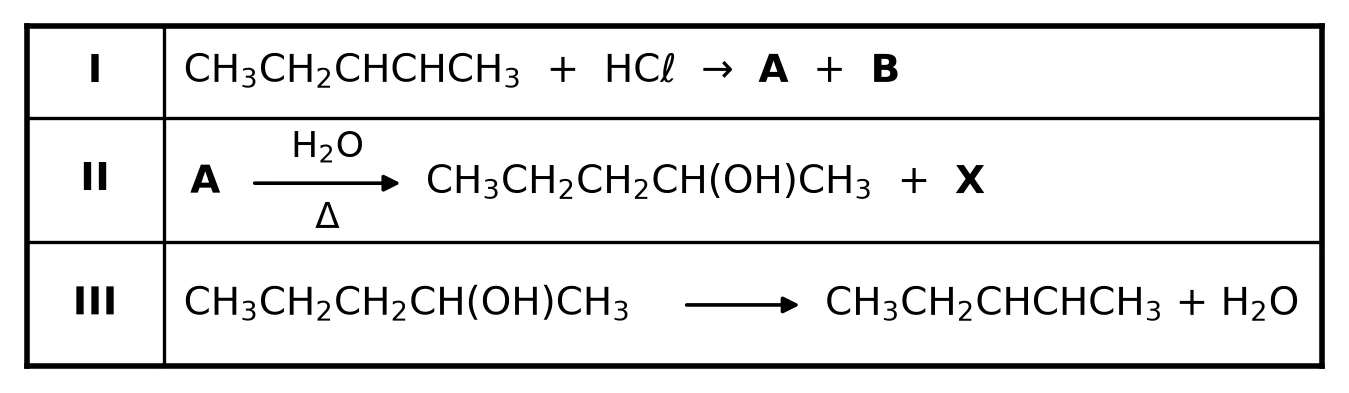 4.2.7 Write down TWO terms that describe this type of reaction.(2)
Show the memo (2 ticks)Memo
- ✓First termElimination
- ✓Second termDehydrohalogenation / dehydrochlorination
- ✓
4. Question 4.6.2 · November 2024 · Paper 2 · National (DBE) · 3 marks
Study the flow diagram below.
Reaction I is a CRACKING REACTION forming two organic compounds, W and T, as the ONLY products.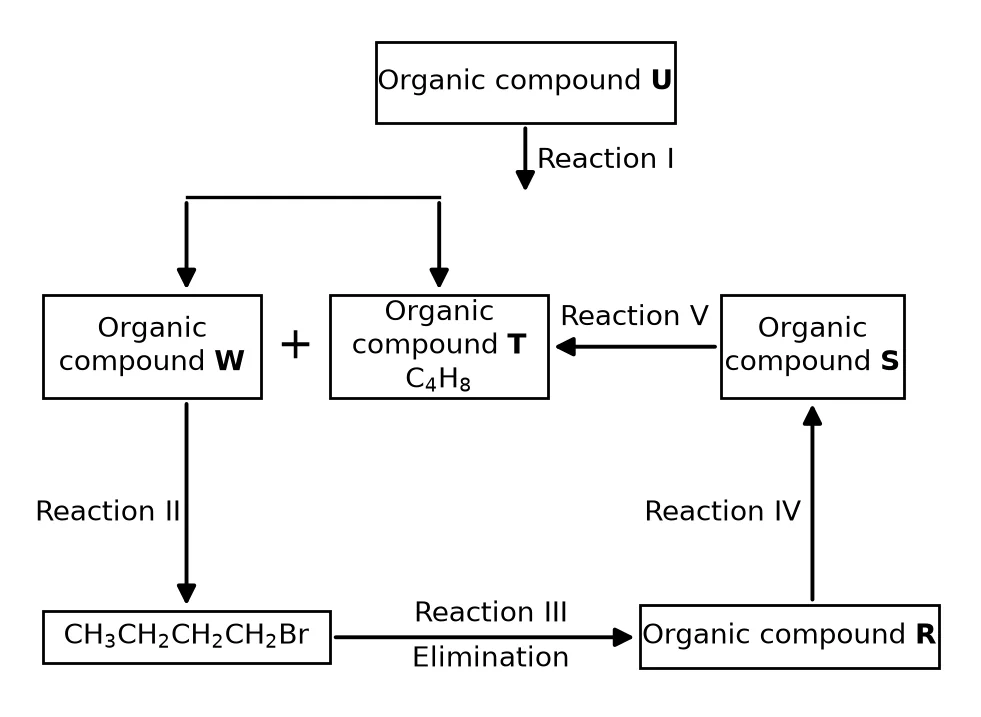 4.6 Compounds R and T are positional isomers.
The inorganic reagents shown below are available for reactions IV and V.
; (conc.); NaOH(conc.); HBr;
Write down:4.6.2 The balanced equation for reaction V, using STRUCTURAL formulae and the correct reagent shown above(3)Show the memo (3 ticks)Memo
- ✓NaOH2-bromobutane + NaOH
- ✓Whole structural formula of alkene correct (functional group on second/first C atom)But-2-ene, , drawn with all bonds and H atoms (or but-1-ene from 1-bromobutane)

1 mark · Draw structural formulae
- ✓NaBr + HO+ NaBr +
- ✓
5. Question 4.1.5 · November 2025 · Paper 2 · National (DBE) · 2 marks
4.1 Study the three organic reactions I, II and III below. Compounds T and W are organic compounds. R and S are inorganic substances. Consider only the major products.
Reaction I:
Reaction II:
Reaction III:
Write down the:4.1.5 STRUCTURAL formula of compound T(2)Show the memo (2 ticks)Memo
- ✓(a) Correct functional groupThe C=C double bond between carbon 2 and carbon 3 (but-2-ene, the major product).
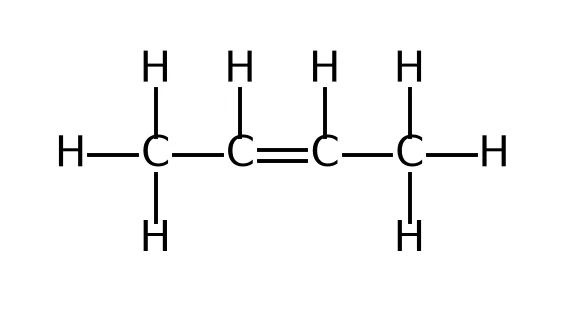
- ✓(b) Whole structure correct drawn with all bonds and all 8 H atoms.
1 mark · Draw structural formulae
- ✓
6. Question 4.2 · May/June 2025 · Paper 2 · National (DBE) · 2 marks
In the flow diagram below, a primary alcohol P is used as a starting reactant to form different organic compounds under different reaction conditions.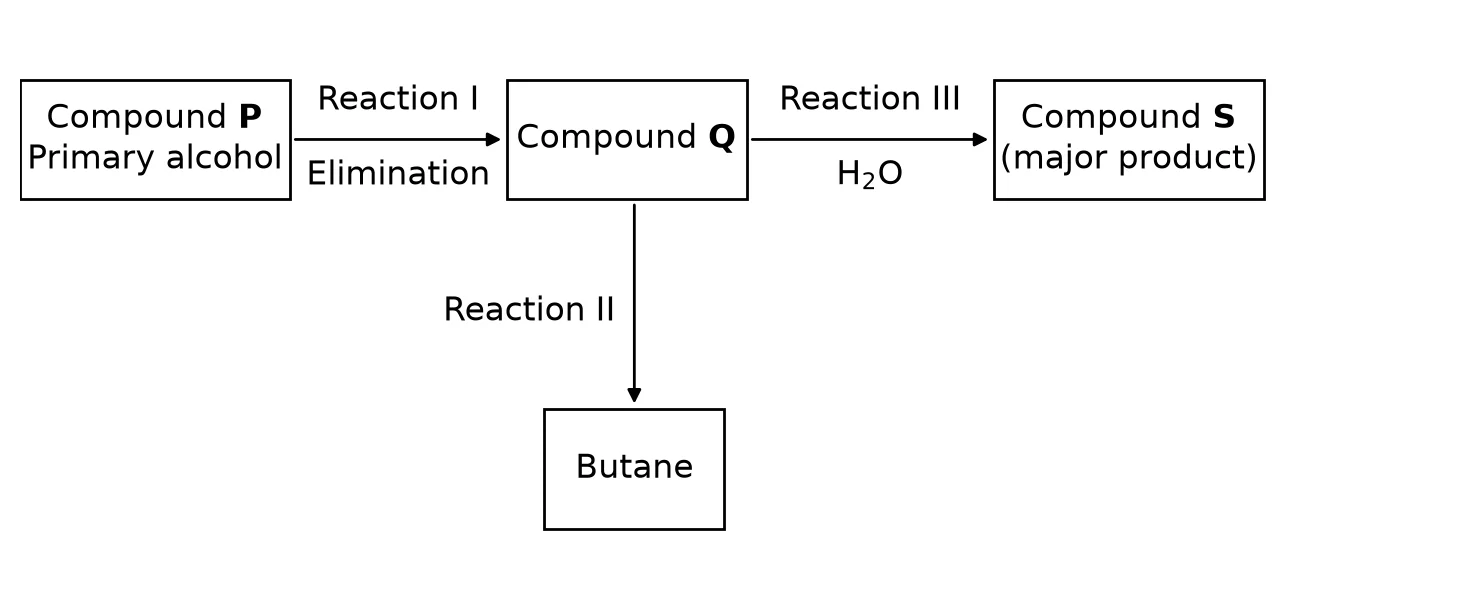 4.2 Write down the IUPAC name of compound P.(2)
Show the memo (2 ticks)Memo
- ✓Correct chain length (But)Chain length: but- (4 C atoms)
- ✓Everything else correctButan-1-ol
1 mark · Write IUPAC names
- ✓
Free on Android
Know exactly which skill is costing you marks.
Mark past papers tick by tick in the NavyBlue app. It remembers every mark you lose, shows you the skills to fix first, and picks your next questions.
Get NavyBlue free on Google Play
