Grade 11 Physical Sciences · Mechanics · Draw a closed vector diagram
Closed Vector Diagrams Grade 11
Draw forces head-to-tail to form a closed triangle, showing that forces acting on an object in equilibrium add up to zero.
- questions use it, all grades · 12 past paper, 10 practice
- 22 questions use it, all grades · 12 past paper, 10 practice
- videos
- 3 videos
Learn it: draw a closed vector diagram
Pick one and watch it, then try the questions below. Videos load only when you tap play.
Now try it on a real exam question
No sign-up. Takes 3 minutes.
Question 1.1 · May/June 2025 · Paper 1 · National (DBE) · 2 marks
Which ONE of the following vector diagrams is the CORRECT representation of the three forces?(2)
Work it out on paper first. Then mark yourself with the official memo, one tick at a time.
More past paper questions: draw a closed vector diagram
Work each one out first, then open the memo and check every tick.
3. Question 9.2 · November 2018 · Paper 1 · National (DBE) · 4 marks
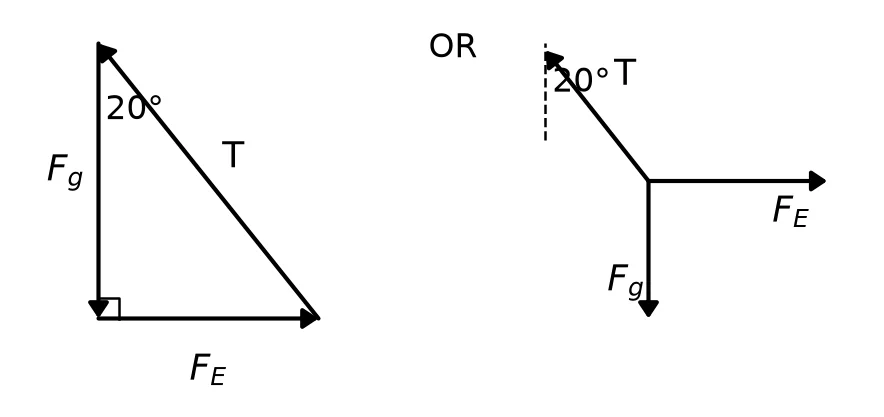
A small isolated sphere A, with a mass of g, carrying a charge of C, is suspended from a horizontal surface by a string of negligible mass. A second sphere B, carrying a charge of C, on an isolated stand, attracts sphere A so that the string forms an angle of to the vertical. The horizontal distance between the centres of the two spheres is cm. Refer to the diagram below.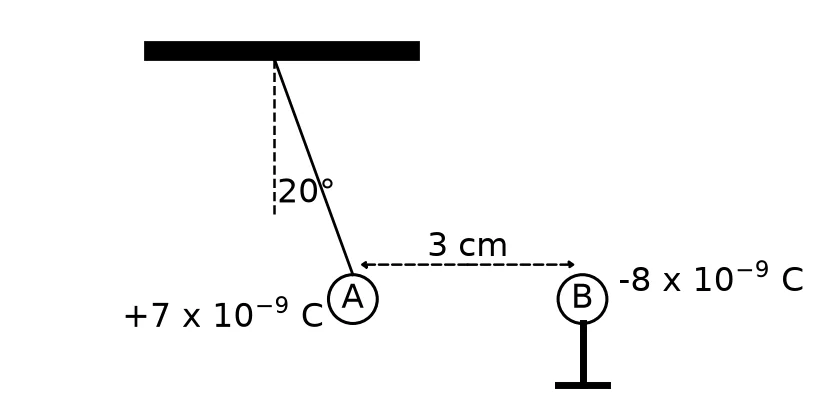 9.2 Draw a VECTOR DIAGRAM of the forces acting on sphere A. Indicate at least ONE angle.(4)
Show the memo (4 ticks)Memo
- ✓Weight drawn vertically downwards (accepted labels: weight, , ).
1 mark · Draw a closed vector diagram
- ✓Tension along the string, up and to the left (accepted labels: tension, ).
1 mark · Draw a closed vector diagram
- ✓Electrostatic force horizontal, to the right towards B.
1 mark · Draw a closed vector diagram
- ✓AngleOne angle indicated: between and the vertical.
1 mark · Draw a closed vector diagram
- ✓
4. Question 1.3 · November 2025 · Paper 1 · Provincial · 2 marks
Various options are provided as answers to the following questions. Choose the answer and write only the letter (A–D) next to the question numbers (1.1 to 1.10) in your ANSWER BOOK, for example, 1.11 D.1.3 In the vector diagram below, the resultant (net) vector is ...(2)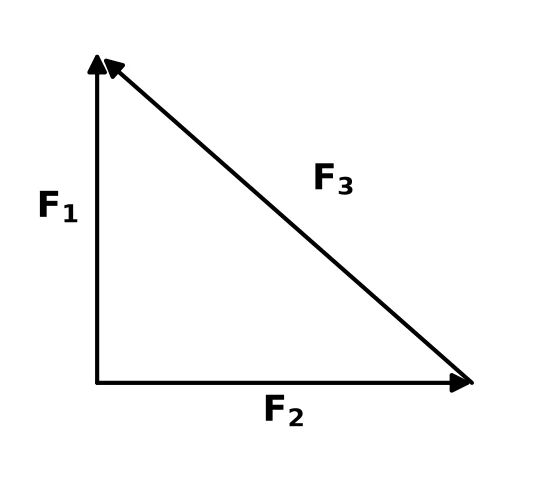
Show the memo (2 ticks)Memo
- ✓Correct option B and are drawn head to tail: starts at the head of . runs from the tail of to the head of , so is the resultant.
Answer: B2 marks · Draw a closed vector diagram
- ✓
5. Question 2.3 · November 2025 · Paper 1 · Provincial · 2 marks
Three forces, , and , NOT DRAWN TO SCALE, are applied to a crate of kg as shown in the diagram below.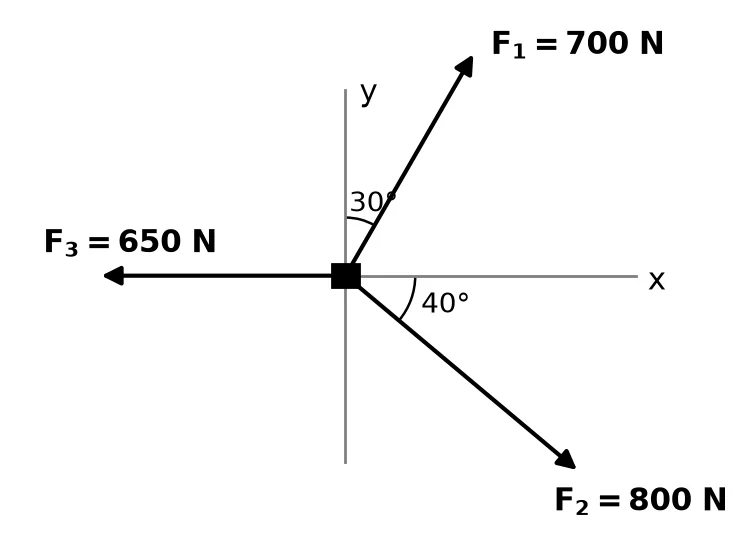 2.3 Explain why the three forces will not form a closed vector diagram.(2)
Show the memo (2 ticks)Memo
- ✓ReasonThe resultant force is not equal to zero.
2 marks · Draw a closed vector diagram
- ✓
6. Question 2.3 · June 2024 · Paper 1 · Provincial · 4 marks
The apparatus shown below was used to determine the resultant of two co-planar forces X and Y acting at a common point O.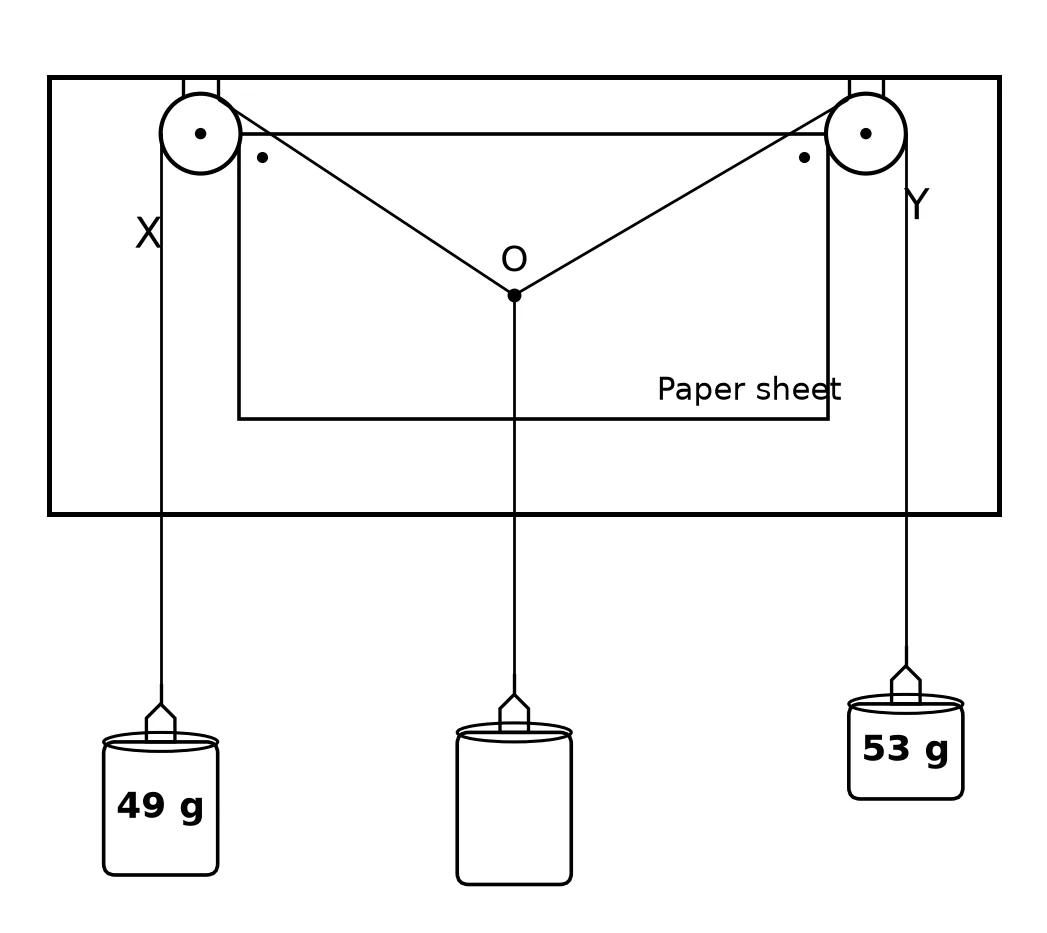 2.3 An INCOMPLETE diagram for the results of this investigation is given below (the detachable sheet on page 13 of the question paper). Complete the diagram and determine the magnitude of the resultant force.
Use a scale of mm N.(4)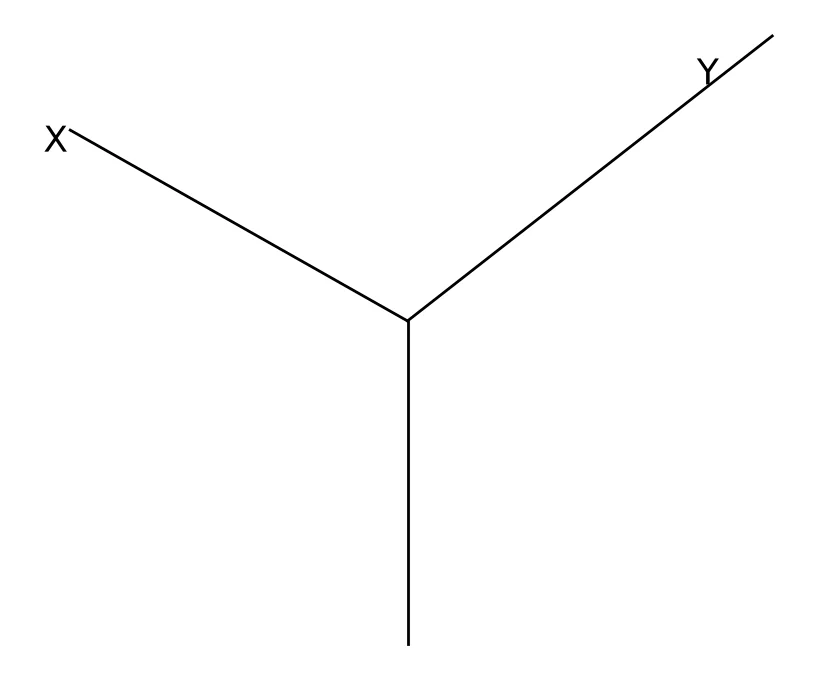
Show the memo (4 ticks)Memo
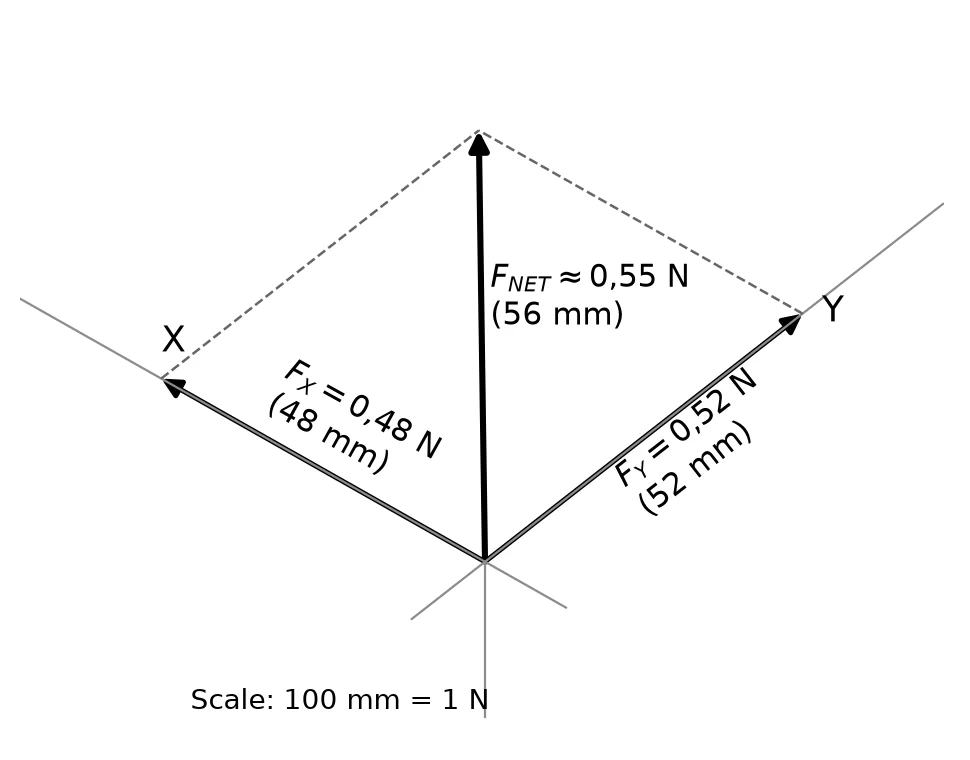
- ✓Force X plotted to scale N, drawn as an arrow from O along string X, its length to scale.
1 mark · Draw a closed vector diagram
- ✓Force Y plotted to scale N, drawn as an arrow from O along string Y, its length to scale.
1 mark · Draw a closed vector diagram
- ✓Parallelogram completed and resultant drawnDraw a line through the tip of parallel to Y and a line through the tip of parallel to X. The resultant is the diagonal from O to where these lines meet (it points straight up, opposite the middle string).
1 mark · Draw a closed vector diagram
- ✓Magnitude of the resultantMeasure the diagonal and convert with your scale:
N (about mm on a scale of mm N)1 mark · Draw a closed vector diagram
- ✓
Free on Android
Know exactly which skill is costing you marks.
Mark past papers tick by tick in the NavyBlue app. It remembers every mark you lose, shows you the skills to fix first, and picks your next questions.
Get NavyBlue free on Google Play