Grade 11 Physical Sciences · Chemical Change · Paper 2 (Chemistry)
Energy and Chemical Change Grade 11
Real Energy and Chemical Change past paper questions and answers from 2022 to 2025, with each memo split into the ticks examiners give. Try one, mark yourself, and see exactly which skill cost you marks.
- past paper questions
- 42 past paper questions
- skills
- 2 skills
- videos
- 2 videos
Try a Energy and Chemical Change exam question
No sign-up. Takes 3 minutes.
Question 1.5 · November 2025 · Paper 2 · Provincial · 2 marks
(I) The activation energy must be overcome to reach the activated complex.
(II) It is the unstable transition state from reactants to products.
(III) It is the energy released or absorbed during a chemical reaction.
Which of the above statement(s) is/are CORRECT about the activated complex?(2)
Work it out on paper first. Then mark yourself with the official memo, one tick at a time.
Energy and Chemical Change skills
Each skill is one thing a memo gives a tick for. Tap one for its own questions, notes and videos.
- Define rate and energy termsGive the exact meaning of words like exothermic, endothermic, activation energy, activated complex, reaction rate and catalyst.22 past paper questions · 3 videos
- Interpret the energy change of reactionsDecide if a reaction is exothermic or endothermic from ΔH or an energy graph, and calculate ΔH or activation energy (burning releases heat, so ΔH < 0).52 past paper questions · 3 videos
More Energy and Chemical Change Grade 11 questions and answers
Try each one on paper before you open the memo.
4. Question 1.9 · November 2024 · Paper 2 · Provincial · 2 marks
1.9 Which ONE of the following statements is TRUE for an EXOTHERMIC reaction?(2)Show the memo (1 tick)Memo
- ✓Correct optionIn an exothermic reaction more energy is released when new bonds form than is absorbed to break the old bonds. So and the products have LESS energy than the reactants.
Answer: A2 marks · Interpret the energy change of reactions
- ✓
5. Question 5.1 · November 2024 · Paper 2 · Provincial · 2 marks
One of the steps in the preparation of sulphuric acid in the industry is represented by the following reaction:
The graph below shows the energy change during this reaction.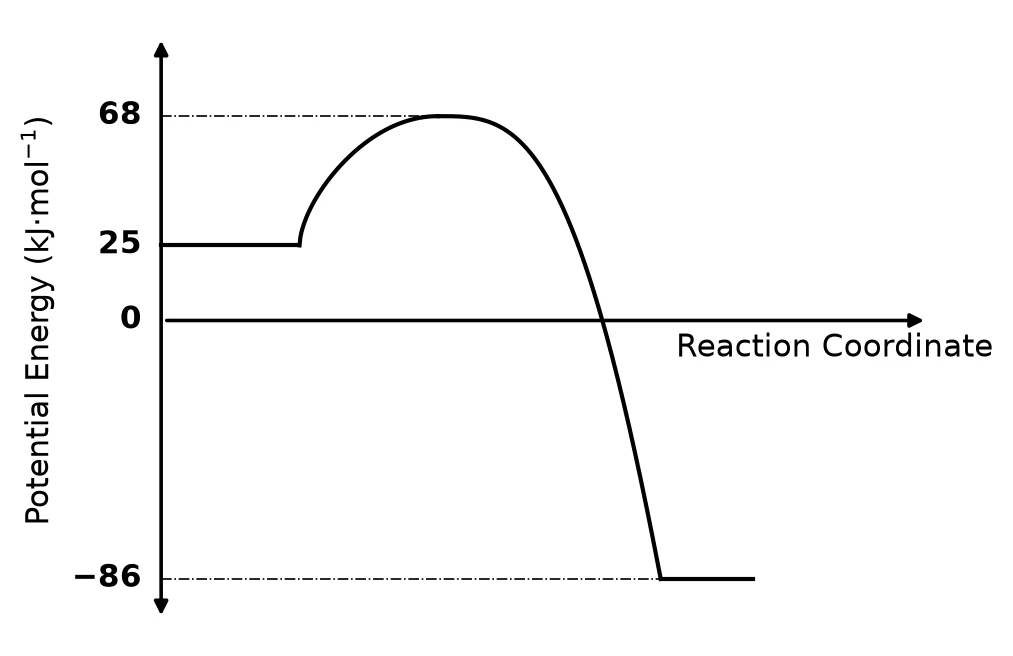 5.1 Write down the type of reaction represented by above graph. Choose from EXOTHERMIC or ENDOTHERMIC. Explain your answer.(2)
Show the memo (2 ticks)Memo
- ✓Type of reactionEXOTHERMIC
- ✓ReasonEnergy is released
OR
OR more energy is released than absorbed.
- ✓
6. Question 1.9 · November 2023 · Paper 2 · Provincial · 2 marks
1.9 Instant hot and cold packs function by dissolving a salt into water. As the salt dissociates, heat is either released in an exothermic reaction or absorbed in an endothermic reaction. Which of the following reactions will be best suited to be used as a hot pack?(2)Show the memo (1 tick)Memo
- ✓Correct optionA hot pack must RELEASE heat, so the reaction must be exothermic (). Only A and B are exothermic. B releases more energy per mole ( kJ·mol against kJ·mol), so it is best suited.
Answer: B2 marks · Interpret the energy change of reactions
- ✓
7. Question 1.1 · November 2023 · Paper 2 · Provincial · 2 marks
1.1 Consider the definition given below:
The high energy transition state between products and reactants.
This is the definition of ...(2)Show the memo (1 tick)Memo
- ✓Correct optionThe activated complex is the unstable, high-energy arrangement of atoms at the top of the energy hump, between reactants and products. Activation energy is the ENERGY needed to reach that state, not the state itself.
Answer: D2 marks · Define rate and energy terms
- ✓
8. Question 5.1.2 · November 2023 · Paper 2 · Provincial · 2 marks
5.1 1,56 g of calcium carbonate is heated as shown in diagram below.
The calcium carbonate decomposes according to the balanced equation:
0,163 g of is produced during this decomposition.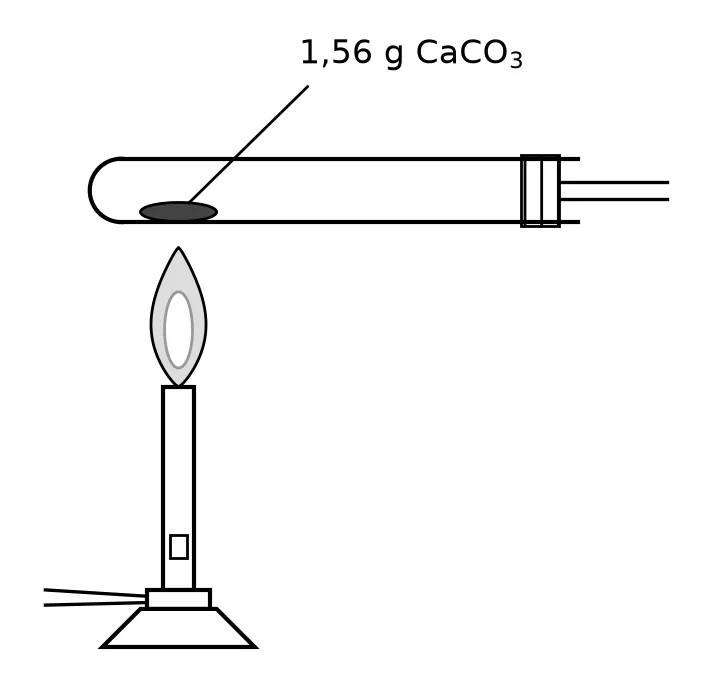 5.1.2 Give a reason for your answer in QUESTION 5.1.1.(2)
Show the memo (1 tick)Memo
- ✓Reason / Net energy is absorbed / Energy of products greater than that of reactants.
2 marks · Interpret the energy change of reactions
- ✓
9. Question 8.2 · November 2023 · Paper 2 · Provincial · 2 marks
Certain chemical reactions are often used to reduce swelling after an athletic injury. In a lab experiment the following reaction was tested and the sketch graph below was obtained.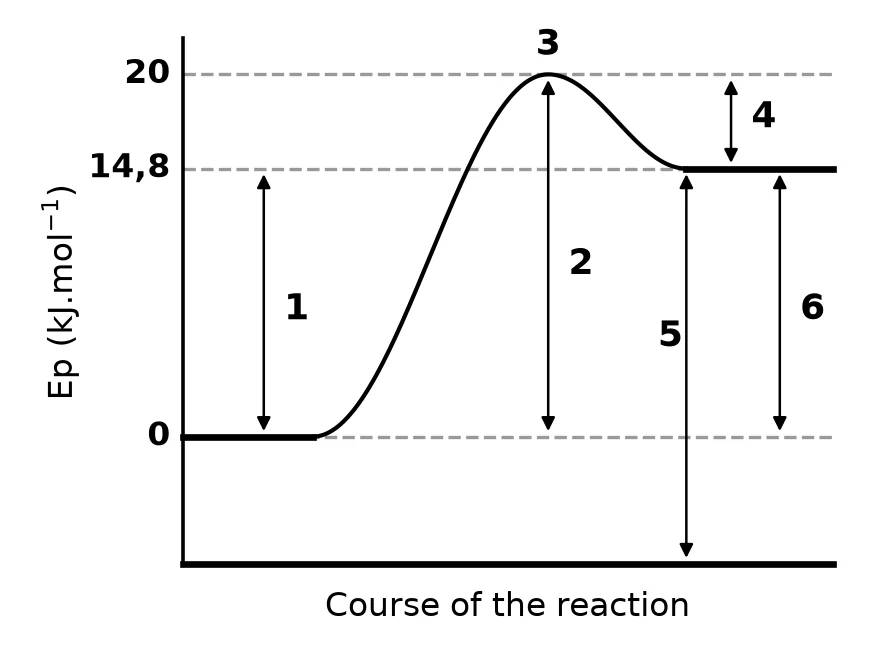 8.2 Explain the answer to QUESTION 8.1.(2)
Show the memo (1 tick)Memo
- ✓ReasonThe products have more potential energy than the reactants.
OR
More energy is absorbed than released.2 marks · Interpret the energy change of reactions
- ✓
10. Question 1.3 · November 2022 · Paper 2 · Provincial · 2 marks
1.3 The minimum amount of energy needed for a chemical reaction to start is called …(2)Show the memo (1 tick)Memo
- ✓Correct optionActivation energy is the minimum energy needed for a reaction to take place. A catalyst only lowers it; the heat of reaction is the net energy change; bond energy is the energy to break one mole of a bond.
Answer: A2 marks · Define rate and energy terms
- ✓
Energy and Chemical Change Grade 11 videos
Short lessons from South African teachers first. Videos load only when you tap play, to save your data.
Free on Android
Know exactly which skill is costing you marks.
Mark past papers tick by tick in the NavyBlue app. It remembers every mark you lose, shows you the skills to fix first, and picks your next questions.
Get NavyBlue free on Google Play
