Grade 12 Maths · Paper 1
Number Patterns, Sequences and Series Grade 12
Real past paper questions and answers from 2024 to 2025, with each memo split into the ticks examiners give. Try one, mark yourself, and see exactly which skill cost you marks.
- past paper questions
- 138 past paper questions
- skills
- 15 skills
- videos
- 15 videos
Try a real exam question
No sign-up. Takes 3 minutes.
Question 3.2 · November 2024 · Paper 1 · National (DBE) · 4 marks
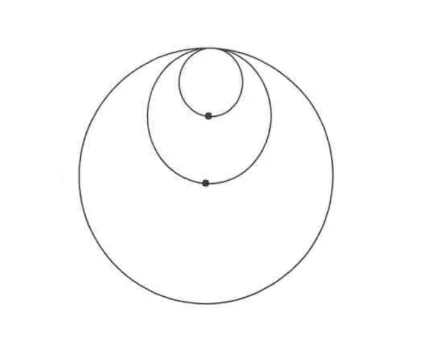
Work it out on paper first. Then mark yourself with the official memo, one tick at a time.
What's in Number Patterns, Sequences and Series Grade 12
Each skill is one thing a memo gives a tick for. Tap a skill for its own questions, notes and videos.
Sequences (Progressions)80 past paper questions
- Reject solutions that do not fitCheck each answer against the situation and throw out any that make no sense (for example a length cannot be negative, so reject x = −4).7 past paper questions · 3 videos
- Continue a number patternFind how a number pattern grows and write the next terms, for example 3, 7, 11, 15 adds 4 each time, so the next term is 19.20 past paper questions · 3 videos
- Find a linear general termWrite a formula for any term of a pattern that adds the same amount each time, for example 5, 8, 11, … gives Tn = 3n + 2.36 past paper questions · 3 videos
- Split a combined sequenceSeparate a sequence that mixes two patterns into its two parts, for example 1, 2, 3, 4, 5, 8 splits into 1, 3, 5 and 2, 4, 8.10 past paper questions · 4 videos
- Find a quadratic general termWrite the formula Tn = an² + bn + c for a pattern whose second differences are equal, for example 2, 5, 10, 17 gives Tn = n² + 1.19 past paper questions · 3 videos
- Use a quadratic general termUse a quadratic pattern formula to find a term or its position, for example if Tn = n² + 1, then T10 = 101.14 past paper questions · 3 videos
- Use a pattern's first differencesTreat the gaps between terms of a quadratic pattern as their own pattern, for example find which two terms differ by 25.8 past paper questions · 3 videos
- Find the common ratioFind the number each term is multiplied by in a geometric sequence by dividing a term by the one before, for example 3, 6, 12 gives r = 2.12 past paper questions · 3 videos
- Find a geometric sequence termWrite or use Tn = a·rⁿ⁻¹ for a pattern that multiplies by the same number, for example 2, 6, 18, … gives T5 = 2 × 3⁴ = 162.11 past paper questions · 3 videos
Series24 past paper questions
- Split a combined sequenceSeparate a sequence that mixes two patterns into its two parts, for example 1, 2, 3, 4, 5, 8 splits into 1, 3, 5 and 2, 4, 8.10 past paper questions · 4 videos
- Calculate an arithmetic series sumAdd the terms of a pattern with a constant difference using Sn = n/2[2a + (n − 1)d], for example 1 + 2 + … + 100 = 5 050.18 past paper questions · 3 videos
- Calculate a geometric series sumAdd the terms of a pattern with a constant ratio using Sn = a(rⁿ − 1)/(r − 1), for example 1 + 2 + 4 + 8 = 15.14 past paper questions · 3 videos
- Prove a theorem or formulaWrite out the standard proof of a theorem or formula step by step with reasons, for example proving that the angles of a triangle add up to 180°.10 past paper questions · 4 videos
Sigma Notation9 past paper questions
Infinite Geometric Series25 past paper questions
- Find the common ratioFind the number each term is multiplied by in a geometric sequence by dividing a term by the one before, for example 3, 6, 12 gives r = 2.12 past paper questions · 3 videos
- Use the convergence conditionDecide if a geometric series adds up to a fixed number as it goes on forever, which happens only when −1 < r < 1.11 past paper questions · 4 videos
- Calculate the sum to infinityFind the total of a geometric series that goes on forever using S = a/(1 − r), for example 8 + 4 + 2 + … = 16.10 past paper questions · 3 videos
Applications of Sequences and Series7 past paper questions
More Number Patterns, Sequences and Series Grade 12 questions and answers
Try each one on paper before you open the memo.
1. Question 2.1.2 · November 2024 · Paper 1 · National (DBE) · 4 marks
2.1 The first term of an arithmetic series is 7. The common difference of this series is 5 and the series contains 20 terms.2.1.2 The original arithmetic series is extended to 75 terms. The sum of these 75 terms is 14 400. Using sigma notation, write down an equation for the sum of the terms added to the original series.(4)Show the memo (3 ticks)Memo
- ✓Determine general term of series
1 mark · Find a linear general term
- ✓Calculate sum of added terms
1 mark · Split a combined sequence
- ✓Construct sigma notation equation
2 marks · Read and write sigma notation
- ✓
2. Question 2.1.3 · March 2024 · Paper 1 · Provincial · 4 marks
2.1 The given number pattern is a combination of a quadratic sequence and an arithmetic sequence:2.1.3 The given number pattern has two consecutive terms that are equal in value. Determine the positions of the two terms.(4)Show the memo (4 ticks)Memo
- ✓Equate the two general terms
1 mark · Set up an expression or equation
- ✓Simplify and factorize
1 mark · Take out a common factor
- ✓Identify valid solution for n (since is invalid for position)
1 mark · Solve a quadratic by factorising
- ✓Determine term positions in combined patternThe terms are in positions and .
If , positions are and .
Answer: and1 mark · Split a combined sequence
- ✓
3. Question 2.1.1 · May/June 2024 · Paper 1 · National (DBE) · 2 marks
2.1 Consider the geometric series:2.1.1 Does the series converge? Justify your answer.(2)Show the memo (2 ticks)Memo
- ✓Yes, the series converges, so yes
1 mark · Use the convergence condition
- ✓Reason
1 mark · Use the convergence condition
- ✓
4. Question 1.1.2 · March 2025 · Provincial · 2 marks
Consider the arithmetic sequence:1.1 Consider the arithmetic sequence:1.1.2 Calculate the sum of the first 36 terms.(2)Show the memo (2 ticks)Memo
- ✓Substitute into sum formula
1 mark · Calculate an arithmetic series sum
- ✓Calculate final answer
1 mark · Calculate an arithmetic series sum
- ✓
5. Question 3.1.2 · May/June 2024 · Paper 1 · National (DBE) · 4 marks
3.1 Consider the quadratic number pattern:3.1.2 What number must be added to so that ?(4)Show the memo (4 ticks)Memo
- ✓Equate general term to target value
1 mark · Use a quadratic general term
- ✓Solve quadratic equation for n
1 mark · Use the quadratic formula
- ✓Determine value of n-1 term
1 mark · Use a quadratic general term
- ✓Calculate difference
1 mark · Use a pattern's first differences
- ✓
Number Patterns, Sequences and Series Grade 12 videos
Short lessons from South African teachers first. Videos load only when you tap play, to save your data.
Free on Android
Know exactly which skill is costing you marks.
Mark past papers tick by tick in the NavyBlue app. It remembers every mark you lose, shows you the skills to fix first, and picks your next questions.
Get NavyBlue free on Google Play
