Where can you study the electrical trade?
You do not have to go to university for this. The main way in is below. If you would still like a university, use the APS Calculator and the list of universities.
Where to train: TVET colleges, learnerships, and the trade test
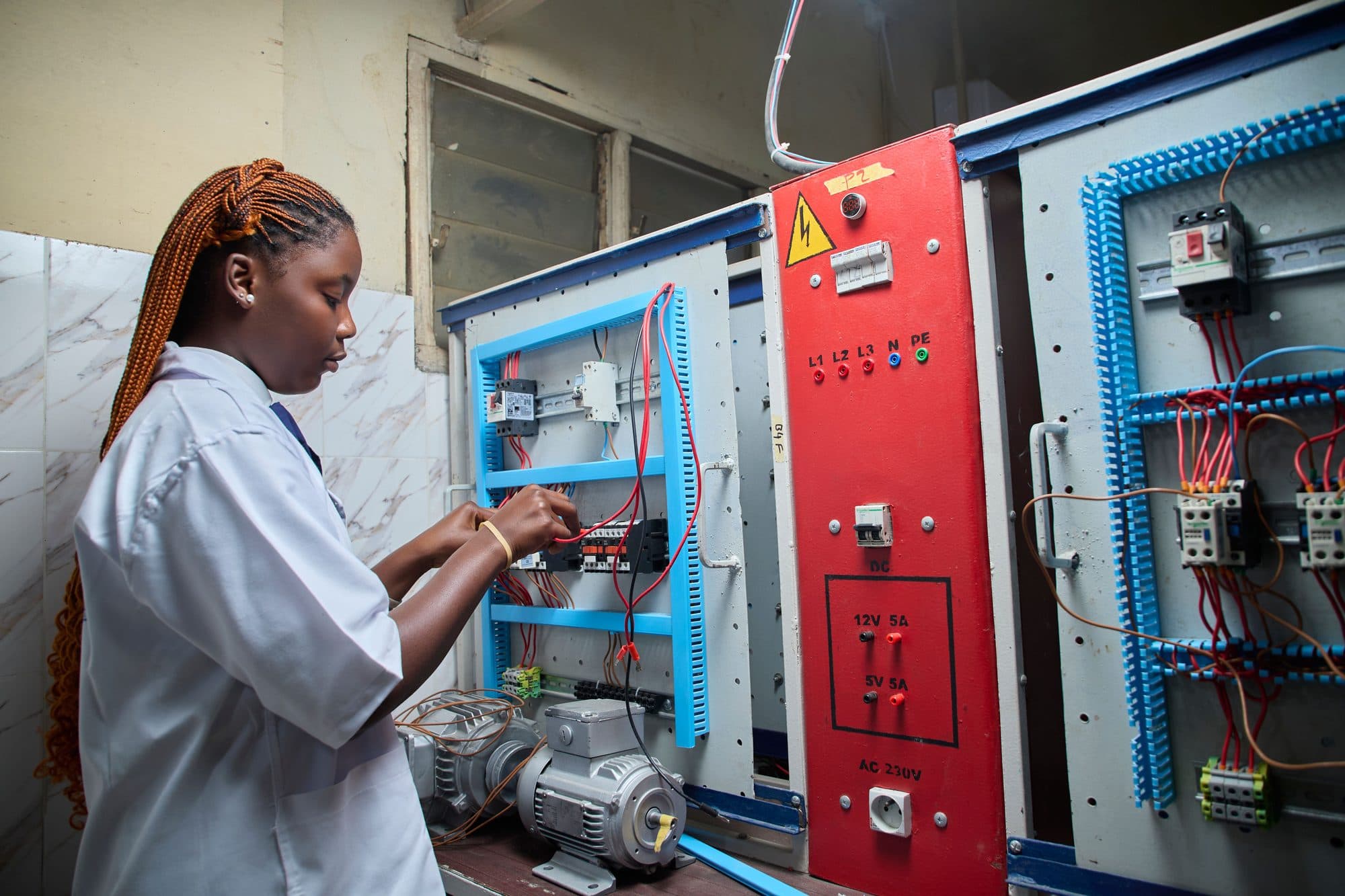
You train for the electrical trade at a TVET college and on the job, not at a university. You study theory (N-courses or NCV) and do workplace training, then pass a trade test to qualify. Here is where to start.
Public TVET colleges (Electrical N-courses or NCV)
Study Electrical Engineering N1 to N3, or the NCV, at a TVET college near you. Find one on our list.
SETA electrical learnerships
The energy (EWSETA) and manufacturing (merSETA) SETAs fund electrical learnerships, where you earn while you learn.
After your theory and workplace training, you write a trade test at an accredited centre (like INDLELA, the national one). Passing it makes you a qualified Red Seal electrician. To sign electrical certificates (CoCs), you then register as an installation electrician with the Department of Employment and Labour.
Private colleges
Private colleges also offer the electrical trade course. They charge fees, so always check the college is properly registered and its course is accredited before you pay.
Do you run a private college that offers the electrical trade course? List it on NavyBlue.
Questions people ask
Related careers
Not sure yet? These jobs use some of the same school subjects and ways to study.
 Engineering & technology
Engineer
Engineers use maths and science to design and build things that solve problems, from roads and power to machines and computers.
From R 35 000/mo · In demand
How to become a engineer
Advertisement