What You Need to Know About Durban University of Technology
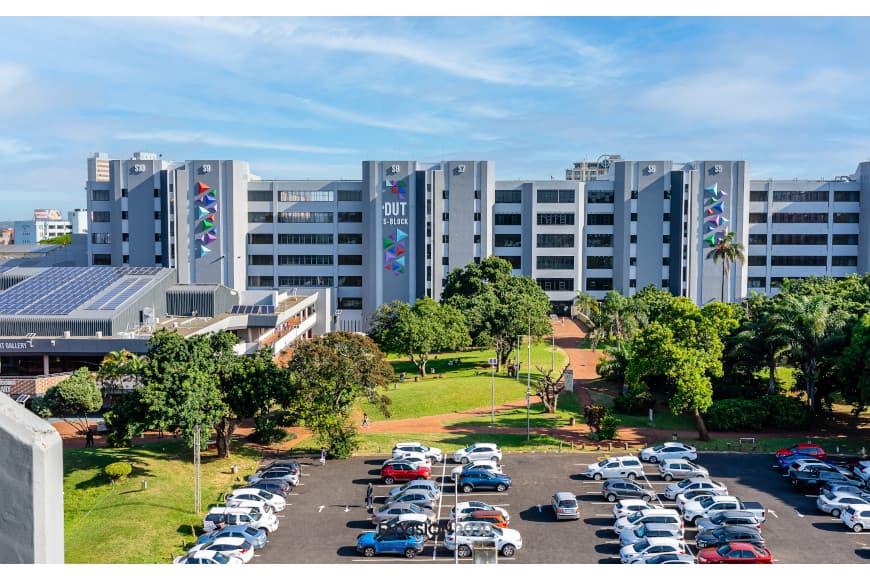
DUT is a University of Technology spread across campuses in Durban and Pietermaritzburg, including Ritson, ML Sultan, Steve Biko, Brickfield, Riverside and Indumiso. It runs five faculties: Accounting and Informatics, Applied Sciences, Arts and Design, Engineering and the Built Environment, and Health Sciences. You can study everything from Commercial Photography to Nursing to Electrical Power Engineering here.
DUT qualifications range from National Diplomas right up to Doctoral degrees, with a strong focus on practical, industry-linked training. If you want hands-on experience alongside your theory, this is the kind of place built for that. It is not the easiest university to get into for every programme, but it is a solid option across a wide APS range.
What APS Do You Need?
DUT uses the standard APS system, adding your best six subjects out of a maximum of 42 points, with Life Orientation excluded. For most diploma programmes you are looking at around 26-28 APS, while degree programmes usually ask for more. One of your two language subjects needs to be English, and meeting the minimum APS does not guarantee you a spot since places are limited.
Don't just chase the overall number though. The Bachelor of Information and Communications Technology, for example, wants Maths at Level 4 and Physical Sciences at Level 4, not just a decent APS score. Always check the specific subject requirements for your programme in the DUT prospectus, not only the APS total.
Fees and Funding
Fees at DUT are charged per module, and they add up differently depending on your qualification. As an example, 2026 fees for individual modules ranged from around R2,500 to R7,210 each, so your total annual cost depends on your specific programme. For the exact breakdown, check the official DUT Student Fees Booklet on dut.ac.za.
Figuring out funding is stressful, but NSFAS can help if your combined household income is R350,000 or less per year. The NSFAS application itself is free, and you apply online through the myNSFAS portal with your ID, proof of income and academic history. International students, including those from SADC countries, pay local fees plus an added levy, so check the fees booklet if that applies to you.
Life on Campus
DUT spreads its students across several campuses including Ritson, ML Sultan, Steve Biko, Brickfield and Riverside in Durban, plus Indumiso in the Midlands. Each campus has its own faculty focus, so where you study depends on your programme. For exact residence costs and availability, check the official DUT Student Housing and Residence Life page for exact details.
Not sure if your marks are enough for the programme you want? Use our free APS calculator to check where you stand before you apply.