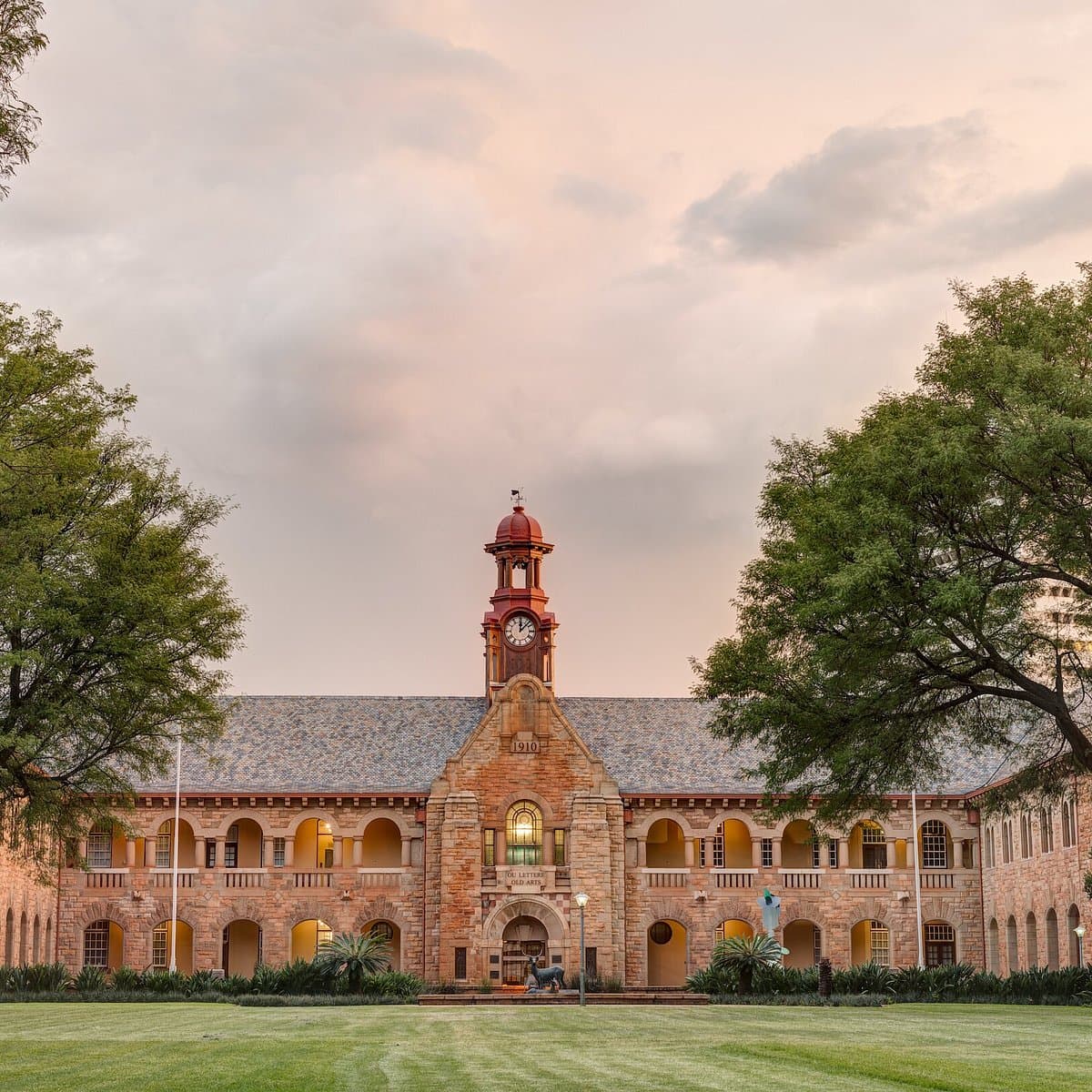

What You Need to Know About University of Pretoria
UP is one of the biggest universities in South Africa, running seven campuses across Pretoria plus a business school in Joburg. It offers over 1,200 programmes across nine faculties, everything from Veterinary Science to Law to Engineering. If you want a big campus with serious range in what you can study, this is one of the top options on the table.
Getting in isn't a given though. Some programmes like the Higher Certificate in Sports Sciences only ask for 20 APS, but competitive faculties want a lot more from you. UP's Law Faculty ranks as the top Law faculty in Africa by THE rankings, so expect that faculty to be tough to crack.
What APS Do You Need?
UP uses the standard APS system based on your best 6 subjects, with Life Orientation excluded from your total. The maximum you can score is 42.
Requirements swing a lot depending on the programme. The Bachelor of Social Work wants at least 28 APS, the Bachelor of Education (Intermediate Phase) also wants 28 APS with 50% for English, and some Engineering, Built Environment and IT programmes ask for as much as 35 APS. Maths and specific subject marks matter more than your raw total for programmes like Engineering and Health Sciences, so check your exact programme's subject list on the UP site before you get too excited or too worried.
Fees and Funding
Studying at UP is not cheap, and your fees depend heavily on your faculty and programme. A BCom (Own choice) first year sits around R60,000 to R72,000, while something like BSc Actuarial and Financial Mathematics runs R75,000 to R85,000 for first year alone. On top of tuition, undergrad students pay an initial fee of R11,000 at registration, and postgrad students pay R13,500.
NSFAS funding is available if your household earns under R350,000 a year, and it covers tuition, accommodation, and other costs like books and transport. Funding is stressful to sort out, but NSFAS became a full bursary from 2018, so you don't pay it back once you qualify.
Life on Campus
UP is SA's largest residential university, housing over 8,000 students across its res system. You apply for residence at the same time as your study application, and if you get a spot, you pay a levy to secure it. Residence only covers one year at a time, so you need to reapply annually, and your academic average affects your chances of keeping your spot.
Free Wi-Fi comes standard in residences, and buses shuttle students between UP's seven campuses if your classes are spread out. Not sure if your marks are enough to get into your programme? Use our free APS calculator to check where you stand before you apply.